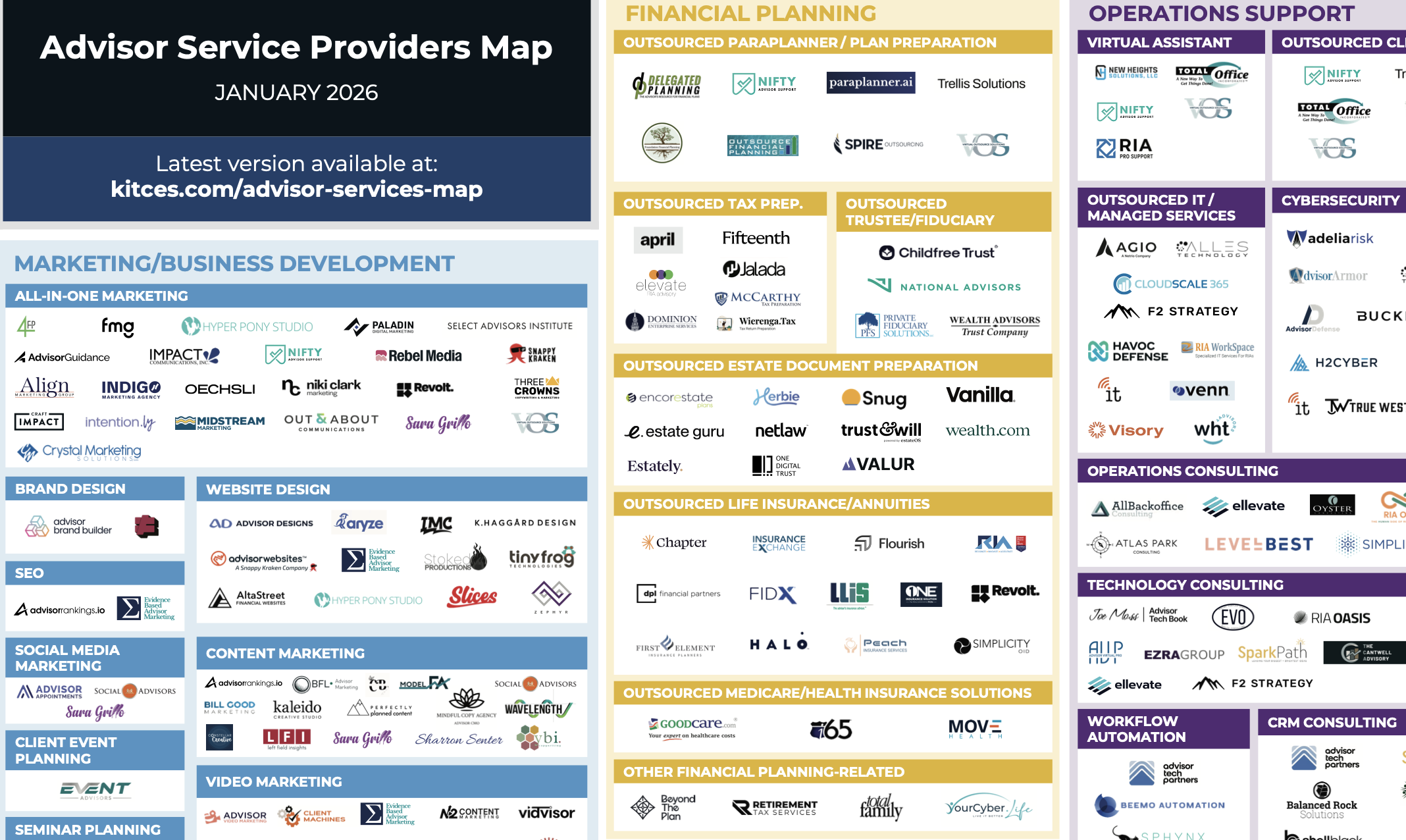
For firm leaders, it says this coaching work has been vetted by someone who is known for rigor, depth, and long-term thinking. That matters in an industry where trust is everything and attention is limited.
But the real value of this recognition is not the list itself.
It’s how firms choose to use it.
Why the Kitces List Carries Real Weight
Michael Kitces has built his reputation by doing the opposite of what most marketing voices do.
He goes deep instead of wide.
He values evidence over trends.
He focuses on ideas that hold up in practice.
Firm leaders, Advisors and OSJs trust his recommendations because they are selective and grounded in real experience. His audience includes decision makers who care about sustainable growth, advisor development, and doing things the right way.
When a coaching company appears on his map under Sales and Marketing Coaching, it communicates something very specific.
This is not surface-level marketing help.
This is strategic work that supports how advisors grow over time.
That distinction is important.
Where Most Firms Stop Short
Many companies treat third-party recognition as a marketing moment.
They add a logo to a website.
They share a short announcement.
They move on to the next initiative.
That creates visibility, but not impact.
Firms that get real value from credibility signals use them to remove friction inside the organization and to strengthen how advisors are supported day to day.
Turning Credibility Into Advisor Buy-In
One of the biggest challenges leaders face is getting advisors to engage with coaching or training in a meaningful way.
The resistance usually isn’t about time or money.
It’s about trust.
Advisors are constantly pitched tools, programs, and systems that promise growth and deliver very little. Over time, that creates skepticism.
A recommendation from Michael Kitces helps cut through that noise.
It answers the question advisors rarely ask out loud but always think first:
“Is this actually worth my time?”
When that question is answered early, engagement becomes much easier.
Creating Alignment Without Forcing Uniformity
In many firms, advisors are left to figure out marketing on their own.
Using a trusted coaching resource gives leadership a reason to anchor advisors around a shared foundation. Not a rigid script, but a clear approach to clarifying value, messaging, and growth priorities.
That kind of alignment reduces confusion without limiting individuality.
Supporting Confidence, Not Just Activity
Many advisors are busy with marketing but still feel unsure.
They aren’t confident in how they describe what they do.
They chase tactics that don’t fit their strengths.
They struggle to explain why the right clients should choose them.
Coaching focused on clarity helps advisors slow down and get grounded.
They learn how to:
Articulate their value clearly
Focus on the right audience
Make decisions that align with how they want to build their practice
When advisors feel clear, their marketing becomes simpler and more effective.
Retention Is Often a Clarity Problem
Advisors rarely leave firms because they lack ambition.
They leave when growth feels confusing or unsupported.
When firms invest in coaching that helps advisors think clearly about their business, advisors feel seen and supported rather than managed or pushed.
That support builds trust.
Trust builds loyalty.
Loyalty protects long-term retention and growth.
Recruiting With Substance, Not Promises
Every firm claims to support advisor growth.
Few can explain how.
Being able to point to a coaching partner recognized by the most respected educator in the profession changes that conversation.
It’s concrete.
It’s credible.
It signals quality over hype.
That matters to experienced advisors who are evaluating where they want to build their future.
Why Susan’s Work Fits This Moment
For more than 20 years, Susan has worked with financial professionals to help them clarify what makes them valuable, sharpen their messaging, and create marketing plans that support sustainable growth.
This isn’t about louder marketing or quick wins.
It’s about building a clear foundation that advisors can rely on as their business evolves.
That clarity benefits advisors and the firms they belong to.
A Final Word for Firm Leaders
Third-party credibility only works if it’s used intentionally.
When recognition is treated as a tool rather than a trophy, it becomes a way to support advisors more effectively and to build a stronger firm culture around growth.
If your advisors feel scattered, inconsistent, or unsure about their marketing, that’s not a motivation issue.
It’s a clarity issue.
And clarity is something you can fix.
If you’d like to talk about how structured coaching can support advisor development, retention, and long-term growth across your firm, let’s connect and have a real conversation.
Clear thinking leads to better outcomes.
What Your First 12 Months Look Like After Choosing A Niche
Key Takeaways
Enter your first year in a niche with a timeline. Map out goals and milestones, and loose plans to adjust as you learn, and your site develops.
Here’s what your first year looks like after going niche. Building a successful niche blog requires three powerful months of foundation work.
Here’s what your first 12 months will look like after you select your niche.
Going beyond content writing by dabbling in different content formats, investing in marketing, and teaming up with others will make you expand your reach and authority.
By tracking KPIs like traffic, engagement, and qualitative feedback, you can adapt your approach and maintain growth.
Confront the emotional realities of niche blogging, whether it’s the post depression of a low-traffic post, the inevitable comparison game with other bloggers, or burnout. Take care of yourself and your community to keep your inspiration and output high.
What your first 12 months look like after you choose a niche defines how you grow and develop skills in surprising ways. Your first weeks are spent learning the key trends and main problems in that field. As months go by, you begin to assemble your network and engage with groups or forums to exchange thoughts. By the halfway point, you will have laid out goals and tracked your wins and misses, adjusting your strategy as you progress. Toward the end of the year, your work will demonstrate actual craft in your niche, and you’ll encounter new people and new challenges. To help you get the most from these months, the next section breaks down each step with clear tips.
Your First Year Timeline
Your first year after choosing your unique niche is about establishing a foundation, gaining traction, and learning to iterate. Each stage introduces new objectives, challenges, and learning opportunities for niche marketers. Your plan should be both concrete and malleable, bridging between the aspirational and the exploratory. There are always unexpected twists and turns, but marking key milestones, tracking your growth, and changing course when needed help you make steady progress even when the path changes shape.
1. Months 1-3: Foundation
Begin identifying your core audience and their needs. This is your first-year timeline. This step is time-consuming. The more defined your avatar, the simpler it is to write posts that resonate and make people return.
Next, construct your content plan. Plan 10 to 20 blog post ideas that solve real problems for your group. Choose subjects that demonstrate depth but are accessible. A good early example is “Simple Data Tools for New Analysts.” You want your readers to regard you as practical and reliable.
Install tools—Google Analytics, Search Console, simple sign-up. Even if your audience is tiny now, you have to keep track of what works. Construct a slick landing page that illustrates what your niche is about, with a compelling call to action to keep visitors or sign them up.
2. Months 4-6: Momentum
Increase your posting rate by targeting two to three posts a week. This strategy establishes an even stream of fresh content, maintains reader interest, and provides you with additional information to analyze. For many freelancers, there’s a business model shift during this period, typically after observing which topics attract the most attention, especially in niche sites.
Kick off a social media strategy by choosing two platforms where your audience hangs out. Post your top posts, participate in group discussions, and answer questions. Early outreach can land you your first clients. Many freelancers discover their first gigs via job boards or social networks, which can be part of a broader online business route.
Review your analytics regularly. Check out traffic sources, bounce rates, and which posts attract clicks. Turn instead to what readers love most. If you see a demand for a topic, dig in. By the sixth month, you could discover that startups aren’t your optimal customers, helping you narrow your customer avatar.
Give affiliate programs a shot. Amazon Affiliates is a snap to get going, but cross-check with others! Revenue can be tiny in the beginning, but it’s a step to creating a real business.
3. Months 7-9: Refinement
Review your progress using site metrics and user feedback. This is when many freelancers start to adapt. Your first plan may have shifted a lot by now. Some say their business changes shape more than once in the first year.
Make your SEO sharper. Rewrite posts with improved keywords and repair on-page problems. Examine the best posts for better titles, summaries, and links between posts. Experiment with new formats, such as short videos or guest posts. Video how-tos or interviews attract new readers and keep your site fresh.
Modify your keywords according to search and analytics. Maintain a list of what people search for to find your site, and write more on those subjects.
4. Months 10-12: Authority
Concentrate on quality content, such as case studies, how-tos, or expert roundups. This assists in growing your niche authority. Begin contacting other bloggers for guest or joint content. Networking expands your audience and your reputation.
Build your list. Send updates, offer tips, and request feedback. A regular newsletter ensures your audience stays with you. Measure your growth and reflect on your goals. Check out revenue, traffic, and reader responses. Revise your rates every few months. This keeps you reasonable and competitive. Establish a consistent work schedule to maintain direction and continue stretching with every hurdle.
Develop Your Content Philosophy
Constructing your content philosophy in the first month after selecting your unique niche informs everything that comes after. It’s the spine that sustains your blog, steers your prose, and distinguishes you. Your story, your values, and your expertise are a unique cocktail that no one else can replicate. By capturing your journey online, especially through your new site, you begin to carve out a niche of one. Eventually, this clarity and self-reflection develop into a philosophy that grows with your objectives and experiences, ensuring your content remains engaging and credible with readers globally.
Credibility
Obtaining status in your area begins with content that demonstrates expertise. Introduce statistics, use research, and include real-world examples that suit your unique niche. For instance, if you write about AI in health care, don’t just talk in generalities. Dig into a recent case study or cite peer-reviewed studies. This not only demonstrates your expertise but also helps readers trust your voice.
Include testimonials or stories from those who have experienced results following your guidance. A brief case study, such as a reader whose workflow was streamlined after your data analysis tips, makes your effect tangible. Additionally, consider sharing your experience with affiliate marketing, as this can provide valuable insights for beginner niche marketers.
Interview industry experts and feature their tips or interviews on your blog. This enhances your credibility and instills in your readers a wider perspective. It’s also beneficial to incorporate fresh content regularly to maintain engagement.
Be transparent about how you profit from your blog. If you employ affiliate links or sponsored posts, disclose them. Openness around monetization fosters trust over the long term, particularly in a context where readers are adept at sniffing out covert agendas.
Connection
Storytelling is essential to creating connections with your audience. Draw from your own experiences—struggles, errors, and successes—to help others connect. This allows your readers to get a sense of the man behind the statistics, not simply the data.
Make sure you respond to comments or questions, whether on your blog or social media. Even a brief response can make someone feel noticed, and it motivates others to participate.
A newsletter is a great vehicle for staying connected. Post sneak peeks, updates from behind the scenes, or selected news from your industry.
Forums and online groups enable you to connect with your audience where they congregate. Whether it’s a LinkedIn group or a niche Discord server, participating in the conversation demonstrates that you’re invested in the community, not just your own site.
Consistency
Establish a publishing frequency and adhere to it, whether weekly or biweekly. Readers return when they know when to expect posts.
Maintain your voice and style from post to post. A consistent tone makes people identify your brand even if they discover your work elsewhere.
Return to your older posts every few months. Refresh them with fresh information, links, or improved examples. This makes your content valuable regardless of how quickly your industry evolves.
Stay tuned. Sign up for new courses, read industry news, and try new tools. This not only makes your content more amazing, but it also demonstrates to your audience that you never stop evolving.
Beyond Content Creation
More than just writing, when you build a niche site during your first month, your days will drift beyond churning out articles. You’re now building a brand, establishing a compelling landing page, and figuring out promotions. This is when your job transitions from maker to tactician. True growth occurs when you engage, connect, and keep your audience close.
Strategic Outreach
Identifying others in your space is the initial step. Find bloggers, creators, or even micro-influencers who are in your niche. You want folks who talk to the same audience. Platforms like LinkedIn or a niche directory can connect you with key contacts. Once you have a list, study their work so your approach seems genuine, not sterile. In this online business landscape, understanding your competitors can provide valuable insights into potential collaboration opportunities.
Keep your messages short and to the point. Skip the stock phrases. Tell them what you love about their work, demonstrate you’re familiar with their style, and propose collaboration ideas. Guest posts, co-hosted events, or even simple link swaps are effective strategies. This helps both parties grow and puts you in front of a new audience, enhancing your web presence and boosting your rankings.
Industry events, online and in person, can extend your reach even further. Even if you just attend a free webinar, it gives you an opportunity to interact and inquire. They remember your name quickly if you turn up regularly. Social media is another tool. Use it to comment on posts, distribute helpful advice, or pose queries. These little actions accumulate, and people start paying attention, which can lead to exponential growth in your niche sites.
Community Building
You need more than readers; you want a tribe that trusts you. Spend time answering comments, engaging in conversations, and sharing your own struggles. Discuss what you battle and what you discover. This humanizes you. Vulnerability creates trust, and people enjoy knowing there’s a real human behind the posts.
Host a Q&A or a bare-bones live session, even if only 5 people show up. It provides your audience with an opportunity to inquire and be listened to. You don’t need fancy equipment or a studio. A cheap webcam and your voice will suffice. The idea is to maintain honesty. If you find it strange to watch yourself on camera or hear your voice, be aware that this is common for most creatives. With practice, comfort comes.
Invite your audience to share stories or advice. Feature their work in your posts or give them a shout-out on social media. This converts passive readers into engaged fans. Social groups, such as Telegram or Discord, can contribute to developing closer connections. You can start small, and as people join, they bring others in.
Be there every day, even if it’s merely a response or a brief post. Little things done regularly form habits and keep your community vibrant. Remember, you don’t need a massive audience or slick branding to truly make a difference. Center your efforts on genuine conversations and consistent progress, and your tribe will expand.
Measure What Matters
Measure what matters is the backbone of a lasting niche-focused site. The initial 12 months after selecting your niche revolve around understanding what will drive progress and what will merely divert you. With so many potential metrics, it’s easy to drown in an ocean of numbers. Instead, prioritize core KPIs that resonate with your site’s raison d’être, audience, and growth ambition. The ten factors defining a niche—problem, urgency, complexity, profitability, growth, findability, competition, and your fit—should always influence your measurement strategy. If your site is designed to address pressing issues in a niche or affinity group, measure how much your content alleviates those pain points, not simply how many page views you receive.
Key Performance Indicators (KPIs) for Niche Site Success:
Audience Growth: Track unique visitors and returning users. This indicates whether your niche is really catching on and whether your content is sticky enough to attract return visitors.
Content Engagement: Measure average session duration, bounce rate, and scroll depth. These figures inform you whether your audience values and enjoys your content.
Conversion Rate: Define what conversion means for your site—newsletter sign-ups, downloads, or direct sales. Track how many users convert from visitor to participant.
Revenue: For monetized sites, keep a close eye on total income, average revenue per user, and which products or services perform best.
Referral Sources: Understand where your visitors come from—social, search, or direct—and optimize your strategy to boost the most effective channels.
Audience Satisfaction: Use surveys, ratings, and direct feedback to gauge how well you meet your audience’s needs.
Authority and Expertise: Track backlinks, media mentions, and social proof to measure your standing within your chosen niche.
Niche-Specific Goals: Set KPIs based on what matters most in your category, such as solving urgent problems or supporting a mindset and values community.
Competitive Position: Regularly benchmark your performance against peers in your niche to spot opportunities and threats.
Advisor Fit: Assess your own ability to serve the niche’s needs using feedback and results to stay aligned with your audience.
Engagement Metrics
To analyze your online business landscape effectively, follow metrics such as time on site and bounce rate to determine if your content retains interest. Low bounce rates and long sessions indicate that visitors find value in your new content. On social media, utilize likes, shares, and comments as engagement signals. Google Analytics can reveal referral sources and visitor demographics, giving you a clear outline of what is effective and what isn’t. Setting goals, like increasing average session time by 20% in six months, helps you focus and adjust your tactics.
Qualitative Feedback
Polls and surveys can provide a perspective that figures cannot. Direct comments and messages are notoriously good at telling you what keeps your audience up at night. This kind of feedback can help inform topic decisions, writing style, or even web design. Let what you learn inform your content plan for your new site, constantly remodeling it to fit real needs.
Directional Growth
Look at trends that matter in your niche sites. If some topics or formats get the most traffic, double down on those. Your long-term goals, say to be the leading resource in your unique niche, need to change as your niche shifts and others come on the scene. Regularly scan the online business landscape and adjust your strategy to keep ahead.
The Unspoken Realities
Choosing a unique niche can provide direction, yet the initial 12 months are often filled with both exhilarating highs and challenging lows. This journey is shaped by everyday obstacles—like erratic power supply or heating issues—that impact your experience. Regardless of your background or where you study, these factors define your first month in the online business landscape, making it essential to embrace both the struggles and triumphs along the way.
The Silence
There will be extended periods when it seems that no one notices. It’s easy for engagement to drop or disappear for weeks. Most of us wait three to six months before our work gets real attention. If you reside where power or even internet is sparse, these silences likely seem even more prolonged.
Take these lulls as an opportunity to prioritize quality. Review your site, tweak your content strategy, and ask yourself if your posts are doing right by your niche. Others will use this time to acquire new skills or design series that address real-world issues. That’s when you can construct a crisp, rigorous schedule that enables you to maintain momentum, even if you’re burning the midnight oil or cancelling instant gratification to stay on course.
It’s hard to stay committed when you can’t see the results. Global readers encounter isolation, sanctions, and scarcity. These challenges may impede your momentum, but they educate you in patience and perseverance. Pursuing your community, even in minor moments, keeps you grounded. Reply to comments, participate in discussion boards, or organize a little gathering. Make yourself feel, even if your audience is slight.
The Comparison
You’ll witness everyone else in your niche who appears to have it all—more readers, more engagement, more success. This is a trap. Your start versus their growth doesn’t help. Their environment, their assets, and their obstacles are not the same as yours. In about half the cities, over half the people are new, so you gotta find your own way.
Concentrate on what makes your path unique. Your distinct voice, background, and challenges are your currency. If you need to shop in restricted hours or enjoy reduced comfort, that narrative applies. Rejoice in every little victory. Your first comment, your first email subscriber, and your first positive feedback fuel your drive.
Be inspired by others, but don’t let it steal your self-esteem. We all sacrifice in different ways. Some forsake sleep or sacrifice their social life. Some wait months for that opportunity. Acknowledge your toil and understand that constructing something permanent is a gradual process.
The Burnout
Checklist for Preventing Burnout:
Establish a healthy, honest routine and adhere to it. Back off from marathon, unsustainable work sessions, particularly if you’re resource-strapped.
Know what’s important. Come to terms with the fact that you can’t do it all right now. Discipline and focus beat scattered energy.
Take breaks, both short and long. Even a stroll or a silent hour can refresh your inspiration and concentration.
Keep connections alive when you can. If you’re feeling isolated, consult online communities or other bloggers to commiserate and crowdsource tips.
Overlook the unsaid truths. Schedule sleep, schedule meals, and schedule hobbies outside your niche.
Balance is key. Taking it slow and steady will help you endure. If you dig too deep, you’ll lose your love for the work. Construct backups and rock yourself to sleep.
When To Pivot
The initial 12 months post-niche selection are characterized by quick learning and continuous evaluation, especially for those venturing into niche sites. Time to pivot: Assess if your niche still aligns with market demands, your interests, and long-term goals. A pivot, whether it’s an offer or direction reset, becomes essential when growth stalls, passion wanes, or external forces diminish your current path’s value. Most hard pivots occur within 2 years, often around the first month, while ideation pivots can happen in the first quarter post-launch. This timeframe allows for a fair test: two to three months to gauge early ideas and at least six months for a live product with some traction. If your offer continues to decline or motivation fades, it’s time to consider a change.
Stagnant Growth
Pattern
What It Looks Like
Flat User Growth
No new sign-ups or followers for weeks/months
Low Retention
Users stop engaging after initial contact
Poor Conversion
High traffic but few sales or sign-ups
Declining Engagement
Fewer comments, shares, or feedback over time
Flat or falling numbers are not trivial missteps; they’re messages. If, within six to twelve months, your primary metrics remain stagnant with scarcely any retention, consistently lukewarm interest, or a massive fall-off, then it’s time to investigate. Now and again, your content strategy is off target. Retroactively audit what were once successful topics and formats and determine what has shifted. Did you cease experimenting? Did your content lose its focus?
Try new formats: switch from long-form articles to quick videos or start a podcast if you’ve only blogged. Little adjustments can reinvigorate enthusiasm. If that’s a no-go, connect with your audience directly. Request feedback via polls, DMs, or comments. Discover what they want now, not what you thought they wanted months ago. This helps you identify overlooked opportunities and directs your subsequent step.
Lost Passion
Burnout is real — particularly if you forget why you began. When your drive dims, recall what attracted you to this niche. Was it the opportunity to address a grand challenge? Was it community? Now and then, you can discover fresh vitality by concentrating or experimenting with a new approach. For instance, if you started in general health tech, focus on mental health apps or wearables.
Contact peers or the community. One source of inspiration is others in the same struggle. If you’re still drained, take a break. Sometimes leaving it alone inspires new ideas or just clears your head. You should definitely pivot if you find that, no matter what you try, you just don’t care like you used to.
Market Shifts
Tech and data just move fast. Stay updated on changes: new regulations, tools, or big moves from competitors. If the market thinks less of what you offer, even your best work, it’s time to find a new angle.
The key is to always adapt your content to the audience’s needs. If they’re moving on to something else, move with them.
Observing other players in the market for opportunities and achievements. If you see a new trend or pain point, investigate it. Occasionally, a light touch reorientation keeps you on trend. Other times, only a hard pivot will suffice. Be open to new niches, particularly if your current one is contracting or evolving beyond your control.
Conclusion
You enter your first 12 months with a defined direction. You select your niche, establish your plan, and hustle daily to establish your position in the area. You experiment with concepts, discover effective methods, and adjust incrementally to scale. You observe your figures, identify genuine successes, and address what impedes your progress. You encounter harsh realities and develop new abilities and connections. You make your story with every step, not just big victories but tiny gestures that help define your craft. New lessons, new friends, and new goals every month. Keep going. Share your triumphs and your challenges. Your work begins immediately. Jump into the conversation, get some feedback, and forge ahead.
Frequently Asked Questions
1. What Should You Focus On In Your First Year After Choosing A Niche?
Developing a good content strategy is crucial for niche marketers, as knowing your audience and delivering actual value will help you grow trust and influence in your unique niche.
2. How Do You Develop Your Unique Content Philosophy?
Figure out your values, tone, and message to create a compelling landing page. Matching these to your audience makes you distinctive and keeps your content focused and on topic.
3. Why Is Measuring Progress Important In The First Year?
Track important metrics such as traffic, engagement, and conversion rates on your new site to help you figure out what works. This empirical method guarantees you iterate fast and achieve better outcomes.
4. What Are The Common Challenges You May Face In Year One?
You might encounter sluggish progress in your new situation, imposter syndrome, and shifting fads. Flexibility, feedback, and persistence help you get past these initial hurdles.
5. When Should You Consider Pivoting Your Niche Strategy?
Pivot if your niche sites exhibit little growth despite sustained attention, or if your interests shift based on market trends.
6. How Can You Balance Content Creation And Other Tasks?
Your first month after choosing a unique niche will be crucial. Automate or simplify with tools to maintain productivity, ensuring slow and steady progress in your online business landscape.
7. What Is The Biggest Benefit Of Defining Your Niche Early?
What your first month looks like after choosing a unique niche can lead to more intense community involvement and rapid initial growth.
Schedule A Free Consultation For CEPA® Coaching With Susan Danzig
If you’re a CEPA® professional ready to turn your credential into real business growth, now’s the time to take action. At Susan Danzig, we specialize in coaching CEPA advisors to strengthen confidence, attract ideal clients, and build sustainable, scalable practices. Through targeted business development coaching, we help you clarify your niche, refine your messaging, and create systems that consistently generate new opportunities.
Whether you want to expand your referral network, improve client acquisition, or develop a clear growth strategy for your exit planning practice, our proven CEPA coaching framework delivers results.
Schedule a free consultation today to talk about your goals, uncover new growth potential, and see how CEPA-focused coaching can elevate your business to the next level. Let’s design a roadmap that helps you serve more business owners and increase your firm’s impact.
Case Study: Advisors Who Doubled Their Revenue By Specializing
Key Takeaways
By specializing in a specific market segment, you can differentiate your advisory services and develop a stronger brand, so clients can identify your expertise.
With some market research and a bit of self-alignment, you can identify an underserved niche that needs your skill set and position your practice for profitable growth.
By sharpening your value proposition and customizing your marketing to your niche, you will be able to attract and retain higher-value clients, which means happier, more loyal clients.
Evolve your service offering to the unique needs of your niche clients. Integrate sophisticated technologies that enable operational efficiency and improve client engagement.
By tracking KPIs and utilizing data analytics, you can constantly evaluate the impact of your specialization to make adjustments when necessary and keep revenue increasing.
By taking a lesson from this case study and following his lead, focusing on building strong relationships, implementing targeted campaigns, and seeking complementary services that you can provide, you, too, can double your revenue and reputation as a trusted expert.
Case study: advisors who doubled their revenue by specializing shows you how a clear focus can change the way you work and grow your business. When you choose a market and learn what they want, you can build trust quickly. Many advisors here specialize in areas such as tech startups, health care, or family businesses. In doing so, these pros encountered more opportunities to form close relationships with clients and provide superior assistance. You generate more referrals, more consistent income streams, and fewer lost opportunities. The magic is in understanding your niche and demonstrating why your assistance is unique. The rest of this post walks you through how these advisors made the transition and what steps worked best for them.
The Generalist’s Dilemma
Attempting to assist everyone sounds good initially. For many of you, new financial advisors, it’s tempting to say yes to every new client and address every need. You’d assume a wide net casts more opportunity, but the truth is that attempting to be all things to all people generates its own issues. You enter a saturated market of advisors with comparable talents, making it challenging to differentiate yourself. In a world where clients can go online and shop with hundreds of others, fitting in means you lose points. Many clients desire someone who speaks their language and understands their situation, not just someone who checks the bare minimum boxes.
If you’re a generalist, you’re in danger of watering down your brand. Your message becomes fuzzy, and prospects aren’t sure if you really get them. For example, if your site says you do everything, but you don’t specialize, you’ll seem scattered or like you don’t know what you’re good at. Clients seeking help, for example, physicians who have to navigate complicated tax matters, will seek out consultants who demonstrate explicit, specialized expertise in those specific challenges. If you aim for everyone, it’s like aiming at no one. Your brand recedes to the ether. This undercuts your reputation, both digitally and via word of mouth.
Serving all clients equally presents real challenges. Each client group has unique rules, habits, and requirements. When you attempt to work with doctors, entrepreneurs, retirees, and young families simultaneously, it becomes difficult to stay informed about every legal change and new strategy for each segment. You’ll likely find yourself learning more and advising less, feeling overscheduled and perpetually one step behind. Your customers can sense when their consultant is not fully engaged in their particular sphere, which can erode trust and hinder the development of strong, long-term connections.
Traditional lead generation methods—such as cold calling, mass advertising, or broad social media outreach—fail to create consistent momentum. These wide strategies may attract customers, but not necessarily the best ones. You might waste time on prospects that don’t convert or attract consultants seeking free guidance. Advisors who choose a clear specialty, like working with doctors or tech founders, experience quicker, steadier growth. Their names become more prominent in specialized communities and search engines. Satisfied clients in a niche share their experiences with others like them, leading to better word-of-mouth and a targeted online presence that fosters trust more rapidly. This shift often results in larger, more significant increases in business rather than gradual, uncertain growth opportunities.
The Specialization Pivot
Specialization isn’t a trend anymore; it’s a tested method for business owners who want to differentiate, serve with intention, and thrive. By targeting a sharp niche, you can develop sharper expertise and deliver more value than generalists. This approach not only enhances your lead generation efforts but also allows you to solve specialized problems for specialized clients, resulting in happier and more loyal customers. Several advisors who adopted this strategy didn’t just boost revenues but added real assets, up to $200 million in five years. While transitioning from traditional lead generation methods can be challenging, the outcomes often exceed expectations and pave the way for future growth opportunities.
1. Niche Identification
Market research comes first. You need to discover holes in the market where client needs are unfulfilled. Think of groups that don’t yet have specialized solutions, like peers at global consulting firms or young tech founders. Direct your abilities and enthusiasm towards these chances to prevent burnout. Laboring beyond your ardor exhausts rapidly.
Write down some potential niches, then analyze each for growth, profitability, and your ability to serve them better than anyone else. Talk directly to your current customers. Inquire about their pain points, what they wish they had, and what services they find most valuable. Their answers frequently expose neglected requirements and assist you in polishing your focus.
2. Strategy Refinement
Your business strategy needs to align with your niche objective to attract and retain potential clients effectively. For instance, if you’re targeting healthcare executives, craft precise messaging that addresses their specific financial needs. Implement metrics such as new client numbers and retention rates to monitor your progress in lead generation services.
As you gather insights, adapt your strategies accordingly. If a particular message or channel isn’t yielding results, pivot your approach. Continuous feedback from your market enables you to refine your tactics, ensuring you stay aligned with your long-term objectives and responsive to shifts in the competitive situation.
3. Service Evolution
As you specialize, pivot your services. Develop new products or provide services that speak to your specialization. Maybe it’s a niche personal finance play for consulting partners or an investment thesis for techies. Train your team to know what your audience needs so each client touchpoint feels informed and applicable.
Remain in touch with your customers. Collect feedback frequently and leverage it for enhancement. As this evolution continues over time, it helps you provide more value and maintain your market edge.
4. Technology Integration
Use technology to speed up your work and smooth your client experience. Leverage planning tools that allow you to customize tips to your specific field. Automate your marketing and hold your message in front of the right folks without the work.
For example, a good CRM helps you track client interactions and personalize your outreach. These tools allow you to support additional clients without compromising the quality or intensity of your assistance.
5. Performance Tracking
Give yourself concrete metrics to find out if your pivot is working. Monitor revenue, new assets, client satisfaction, and conversion statistics. Use this information to identify emerging areas or discover underserved services.
Review results periodically. Adjust your strategy according to what the numbers tell you. This unassuming loop, measure, analyze, and adjust, keeps your growth consistent and gets you to your goals.
Revenue Doubling Strategies
Doubling your revenue as a business owner begins with a vision. You have to know where you are today, where you want to be, and the gaps in between. Most advisors who hit this mark do one thing well: specialization—serving a niche with great skill and tailored value. To achieve this, it helps to break your revenue into components, examine both price and volume, and identify what puts the brakes on you. Benchmark your figures against both yourself and your nearest peers. This analysis reveals your underperformance. Once you know the culprit, you can act quickly and with intention.
Price is the initial lever. Most niche consultants abandon the hourly rate or flat bundles. They charge value-based fees or work on retainers, offering multiple levels of service. Each option applies to a different kind of client and service. The table below gives a sense of how these options compare for specialized services, emphasizing the importance of lead generation services in reaching potential clients.
Pricing Model
Description
Example (USD)
Hourly Rate
Charge per hour of work
$200/hour
Fixed Project Fee
Charge per project, regardless of hours
$5,000/project
Retainer
Monthly/quarterly fee for ongoing access
$3,000/month
Value-Based Pricing
Price linked to client outcomes
$10,000+ per result
Tiered Service
Packages with increasing features/benefits
$2,000–$8,000/month
Volume comes second. You increase volume by accessing more of your perfect clients. Specialization helps here as well. With a clear niche, your marketing can be focused and precise. Deploy campaigns that resonate with your niche’s pain points and establish your authority. Advisors who doubled their revenue were more likely to use highly targeted online ads, webinars, or white papers to attract qualified prospects in their niche. It pulls in premium prospects willing to pay for your depth of knowledge.
One of the strategies is building long-term relationships. Retention is just as important as new business. Advisors who concentrate on retention have higher revenue per client over time and more referrals. You can do this by establishing consistent check-ins, sharing relevant insights with your clients, and ensuring your services evolve as your clients’ needs shift. For instance, a financial advisor serving tech founders could provide quarterly strategy calls and bespoke reports, engendering trust and loyalty.
Diversification in your niche can also double your revenue. Seek services that complement your core offer. If you consult on investments, consider adding tax or estate support. If you assist startups, conducting workshops or team training can enhance your offerings. These ancillary services allow you to access additional portions of each client’s budget while expanding your value builder system.
Each action should be grounded in a transparent perspective of your value proposition and your industry trends. Utilize a framework, decompose your revenue, verify internal and external reasons, and then take action. Whether your approach is “find-and-fix” (solving today’s problems) or “forward-looking” (planning for tomorrow’s growth), keep your main goal in mind: double your revenue by serving your niche better than anyone else.
Case Study Deep Dive
In contrast to the three advisors who doubled their revenue by specializing, this highlights how business owners can apply strategies, challenges, and lessons from traditional lead generation services to cultivate advisors in their own practice for greater success and growth opportunities.
Advisor Type
Specialization Focus
Key Strategy
Challenge Overcome
Revenue Growth (%)
The Retirement Specialist
Retirement planning for pre-retirees
Personalized seminars, ongoing education
Client trust, regulatory shifts
120
The Tech Entrepreneur Advisor
Financial planning for tech founders
Industry networking, thought leadership
Complex equity, market volatility
110
The Expatriate Expert
Cross-border finance for expats
Targeted community outreach, cultural sensitivity
Taxation, compliance hurdles
130
The Retirement Specialist
Focusing your practice on retirement planning can open a lucrative niche. For clients nearing retirement, there’s often personalized advice to be given around pension choices, tax efficiency, and risk management. You need to chart their specific needs, whether it’s maximizing asset drawdown, preparing for health care, or managing risk of investments as they approach retirement. My best retirement advisors conduct workshops or webinars, demonstrating expertise and generating trust. Lots of people utilize blunt instruments like net promoter scores to monitor client happiness, but take these with a grain of salt—they can obscure as much as they illuminate.
Marketing, of course, is crucial. Hands-on outreach via workshops, straightforward newsletters, and engagement on forums attracts a constant flow of new customers. The top specialists maintain their own education, obtaining designations such as the Chartered Retirement Planning Counselor (CRPC) or similar. It’s part of this continuing education to stay up to date with new rules and offerings. When systems are not built to scale, growth can stall, so invest in tools that support you and your clients as your business grows.
The Tech Entrepreneur Advisor
Advisors to tech entrepreneurs face an increasing horde of potential clients, especially when leveraging effective lead generation services. Tech founders encounter unique challenges such as equity compensation, hyper-growth valuation shifts, and international expansion. If you can explain the tax implications of stock options or assist with liquidity events, you’ll stand out among competitors. Many advisors establish credibility by writing articles, speaking at conferences, or even holding roundtables for tech founders. This thought leadership is a legitimate way to demonstrate credibility and attract referrals, ultimately leading to a more profitable business.
Networking is essential for business owners. Becoming a member of local startup hubs, sponsoring hackathons, or creating a podcast for founders can help you reach the right audience. Advisors regularly face market shocks or CEO transitions that can derail plans overnight. The solution lies in good communication and utilizing Northstarcs, which truly matters to your customers. CAB meetings can provide firsthand perspectives into what tech founders appreciate most, so design these to solicit candid feedback and enhance your lead generation efforts.
The Expatriate Expert
Serving expats means dealing with complicated tax regulations and investment laws across borders. Every client is different. Some want to remit, some want to preserve wealth, or plan their kids’ education abroad. You need to understand international tax treaties and reporting requirements, as well as prohibitions on specific investment products. This is technical work, and errors can be expensive for clients.
It takes more than technical skill to build trust in expat circles. Go to expat networking events, post in international online groups, and team up with relocation agencies — whatever it takes to get in front of prospects. When cultural sensitivity counts, getting to know local customs, communication styles, and expectations will differentiate you from less discerning competitors. Opponents in these circles are loquacious, branding and transparent, timely engagement with issues is critical. Devoting the bulk of your team’s energy to existing customers, as much as 70 percent, maintains loyalty and referrals.
Beyond The Bottom Line
Profit alone doesn’t explain why some advisors double their revenue when they specialize. True growth emanates from your care for clients and the relationships of trust you cultivate. Client satisfaction and loyalty propel your firm ahead. When your customers consider you a partner, not a vendor, they stick around and invite friends. That loyalty is difficult to come by when you attempt to be all things to all people. When you choose a focus, you get to know their needs better, leading to effective lead generation services that resonate with your target market. You can offer tips that are tailored to their world, not some generic stab in the dark. Let’s say you concentrate on doctors. You understand their tax headaches, their insurance anxieties, and how their income fluctuates. That means you can see blind spots they never saw. Customers appreciate this, and they share it with colleagues in their industry. That’s how referrals begin to trickle.
Specialization lets you build deeper bonds with your clients. The more you know about their work and lives, the more they trust you. You’re not simply their consultant; you become part of their group. It gets you noticing opportunities to assist before they even request. You get to work with fewer people but put in more care per person. In practice, this results in being able to charge more for your time and advice. It’s not about getting another 100 clients on your roster. It’s about increasing the amount each one generates. For most advisors, it’s simpler to trade up less wealthy clients for more wealthy clients than it is to simply add names. This makes your days flow, your work sink, and your brand resonate, ultimately enhancing your company’s value.
Reputation is more important than ever. When you become recognized as ‘the’ expert for a niche group, the word gets out. Niche strong firms frequently experience more, not less, referrals. People want to work with someone who ‘gets’ them. With time, your name becomes associated with tangible worth, which can be a powerful sales tool in your marketing activities. This means you can sustain healthy margins even as overhead climbs. No longer can you run a lean shop with 15% overhead. Today, you have to care about profit and growth. The smarter firms monitor both, combining healthy margins today with an aggressive strategy for the future.
There’s a myth that only big firms can win. The fact is, even if you cannot benefit much from scale, you can still increase margins by increasing revenue per customer. Especially in the early years, piling on a few extra clients is an expedient income pump. After that, growing what each client pays is more efficient. Yet even after doubling revenue, a lot of advisors see their own compensation increase only 25%. It’s a reminder of just how much cost and overhead chew up growth. To combat this, utilizing a value builder system can streamline your processes and enhance profitability.
Net organic growth in the industry stands at a mere 3.1%. That’s nowhere near the 10% most firms desire. If you want your firm to last, you have to do more than chase new leads. Specialization, deeper client ties, and expert status are the true levers for growth. By implementing effective lead generation strategies and focusing on building value, you can create a sustainable pathway to success.
Your Actionable Blueprint
Your Actionable Blueprint: A clear plan is the foundation for any advisory practice that hopes to scale. It’s not just the numbers; you need a trajectory that will take you from being a solo worker to a real business. The blueprint below provides you with a step-by-step guide to turn specialization into a profitable business reality. These steps work anywhere and can double your profits, as they have in dozens of case studies around the world.
1. Choose A Specialization With Care
Begin by selecting an area with an alignment between your ability and the market demand. This may involve serving doctors, techies, or small businesses. Leverage data to identify growth opportunities in your discipline. Use online tools like Statista or Google Trends to monitor demand. Consider your existing clients—where do you provide the greatest assistance? Look at their shared needs. This gets you one step closer to building value in your practice.
2. Map Out Your Strategy And Set Milestones
Draft a plan. Divide your ambitious objective, such as doubling revenue within a year, into manageable chunks. For each step, record what you have to do, who will assist, and how you will monitor progress. Track each step on digital project boards like Trello or Asana. Schedule periodic check-ins every 30 days. This helps you see what’s working and repair what’s not, ensuring you stay on track for success.
3. Build A Support System That Scales
You can’t do it on your own. Assemble a back-office staff. You can hire employees or engage in worldwide outsourcing through Upwork or Fiverr. These can assist with paperwork, client calls, or research. Choose tools such as Slack or Zoom for teamwork and Google Drive for secure storage and sharing. Having this backup allows you to devote more time to your clients, which is a crucial step that too many business owners miss.
4. Update Your Client Acquisition Methods
Outmoded client-finding methods, like cold calls, no longer work as well. Instead, reach the right people through LinkedIn, webinars, or online ads. Get your website definitive about your field. Leverage client stories and reviews for trust. Experiment with cheap or free tools, such as Canva for social posts and Mailchimp for emails. This new style of lead generation attracts customers who require your expertise.
5. Keep Learning And Adjusting
Markets move quickly. Stay updated with industry news: read sources such as Morningstar or Financial Times. Join your field’s groups and attend online talks. Pay attention to what your clients are saying and adjust your services accordingly. Experiment with new tools to discover if they assist your growth. Continue to ask how you can do better. It’s this mentality that keeps you out front in a competitive situation.
Conclusion
You witnessed how advisors who specialized expanded more rapidly and generated higher income. Choosing a defined direction reduces time spent wandering. You encounter the appropriate clients for your abilities. You spend less and get more. One advisor reduced their workload by 50 percent and still generated double the income. Another earned more client trust and deep connections in her niche. You get more than just figures; you develop a strong reputation and tangible worth. To step up, experiment with a focus that aligns with your strengths. Explore, see what works, learn as you go, and shape your own plan. Crave more insights or need a hand with your next step? Connect and become part of our community. Your growth begins now.
Frequently Asked Questions
1. Why Is Specialization Important For Advisors?
Specializing makes you remarkable in a sea of sameness, allowing business owners to better serve a particular client group and build expertise. This focused approach cultivates valuable partnerships and trust, leading to more satisfied clients and referrals.
2. How Can Specialization Double Your Revenue?
When you niche, you draw in potential clients ready to pay for you. By utilizing powerful sales tools, you can provide higher-value services and command premium fees, resulting in serious revenue growth.
3. What Steps Should You Take To Pivot From Generalist To Specialist?
Begin by selecting a target market or industry you know. As a business owner, create solutions to meet their needs and utilize powerful sales tools. Revise your messaging and marketing activities to support your new position, then measure your results.
4. Are There Risks In Specializing As An Advisor?
There are dangers, like a reduced possible audience. However, if you select your niche carefully and follow your market as it shifts, you can reduce these dangers and cultivate growth opportunities organically.
5. What Type Of Revenue Strategies Work Best For Specialists?
Specialists utilize traditional lead generation services and value-based fees, ensuring clients who sign long-term contracts receive targeted answers that enhance their experience, ultimately boosting your income.
6. Can Generalist Advisors Benefit From Partial Specialization?
Yes. Even a hybrid model, emphasizing one specialty while utilizing traditional lead generation services, can help you grow faster.
7. How Do You Measure The Success Of Specialization?
Measure metrics like client acquisition rates, average revenue by client, and client retention to assess the effectiveness of your lead generation services; if these improve after specialization, your strategy is working.
Schedule A Free Consultation for CEPA® Coaching With Susan Danzig
If you’re a CEPA® professional ready to turn your credential into real business growth, now’s the time to take action. At Susan Danzig, we specialize in coaching CEPA advisors to strengthen confidence, attract ideal clients, and build sustainable, scalable practices. Through targeted business development coaching, we help you clarify your niche, refine your messaging, and create systems that consistently generate new opportunities.
Whether you want to expand your referral network, improve client acquisition, or develop a clear growth strategy for your exit planning practice, our proven CEPA coaching framework delivers results.
Schedule a free consultation today to talk about your goals, uncover new growth potential, and see how CEPA-focused coaching can elevate your business to the next level. Let’s design a roadmap that helps you serve more business owners and increase your firm’s impact.
How Advisors Can Build A Referral Engine Inside Their Niche
Key Takeaways
Inside your niche, you create a referral engine not by begging for it, but by habitually earning it.
Developing a systematic and structured referral process ensures that referrals become a sustainable and predictable source of new business within your chosen niche.
By defining your ideal client profile and engineering memorable experiences, you make it easier for happy clients to spread your value.
Using technology to automate, track, and measure your referral activities will keep you efficient, help you monitor your performance, and identify places for continuous improvement.
By building partnerships inside your niche and cultivating your digital footprint, you can increase referral opportunities by growing your network and increasing your authority.
Ongoing feedback, communication, and process iteration will help you adapt your referral systems to evolving market demands and drive the most impact.
To find out how advisors can build a referral engine inside their niche, map your strengths to the right network and create places for your clients to spread your name. Powerful referral engines grow from trust and value, not luck. When you maintain your niche in your field, you make it easy for others to remember what you specialize in. Your clients and peers will know precisely who to refer to you. With simple touches such as feedback forms or follow-up calls, you’ll keep in touch and stay top of mind. The body will decompose these steps, display advice, and provide practical examples you can implement immediately.
The Referral Mindset Shift
Building a referral engine in your niche is not about hunting down leads or soliciting introductions; it’s about changing how you see referrals through a strategic approach: stop asking and start earning. This shift involves nurturing stronger connections and prioritizing sustainable worth, establishing yourself as a dependable expert in the financial services industry. By implementing a referral strategy that enables this method and viewing every customer as a collaborator, you lay the foundation for natural, lasting expansion.
From Asking To Earning
Stop soliciting referrals. Instead, earn them by providing service that genuinely differentiates you in your niche. When you become known for solving problems that matter to your clients—such as streamlining data integration for a healthcare provider or helping a fintech startup improve data security—your client engagement process becomes so effective that clients can’t stop talking about you, even if you don’t ask. Outstanding service ignites organic word of mouth and enhances your branding.
Earning referrals is about being a trusted advisor. If your clients view you as the ‘expert’ who truly understands the nuances of their industry, they will feel comfortable referring you. For instance, if you specialize in healthcare analytics, your expertise allows you to solve compliance and privacy issues that more generalists overlook. This authority establishes your credibility in a way that easy referral solicitations cannot match, making your referral strategy more effective.
Build experiences that your clients feel compelled to refer. For example, guide a client through a complicated system upgrade and then provide a plain-English write-up of the difference you made. Small touches, such as sharing valuable content and celebrating project milestones, resonate with people and encourage them to share. Consistency is vital; clients who see you consistently exceed their expectations develop loyalty, making them eager to engage in your referral program.
From Tactic To System
Don’t think about referrals as a one-off tactic; instead, view them as a core business process that enhances your client engagement process. Plan a ‘referral mindset shift’ into your client workflow so people can refer others without it being awkward. This could involve basic online surveys, discreet feedback solicitations, or email check-ins thanking clients for their confidence and patronage.
Make your referral strategy adaptable by reviewing it at least twice a year. If you notice that clients from a specific niche refer more, tailor your marketing campaigns to address that target market. Involve your entire team in this effort; educate everyone, from analysts to receptionists, on identifying and fostering referrals.
Clients should never feel pressured; instead, break down walls by providing them with valuable content or worksheets they can share. A simple, clear process increases your chances of being recommended, thus enhancing your overall client service and satisfaction.
From Transaction To Relationship
Make your work about people, not projects. Relationship-building is more than just hitting deadlines. Take a sincere interest in your clients’ objectives, be it through periodic check-ins or sharing industry-specific insights.
Keep in contact even if you’re not collaborating on a project. A quick message on a milestone or a thank-you note demonstrates that you’re interested in the relationship, not just the deal. Query them in ways that help you understand their evolving needs.
The more you know your clients, the simpler it is to customize your services. Personalized service generates more targeted and valuable referrals. When you celebrate your clients’ big wins, you reinforce trust and deepen the connection, setting the stage for more referrals from their immediate networks.
How To Build Your Referral Engine
A powerful referral program is the lifeblood of sustainable growth for financial advisors in any specialty. By implementing effective marketing strategies, a referral system enables you to connect with ideal clients, establish trust, and differentiate yourself in a competitive marketplace. With a thoughtful client engagement process, you provide customers with incentives to discuss your work and facilitate it. Below are the core steps to develop a reliable referral engine.
Define your ideal client for precise targeting
Engineer a client experience worth sharing
Build and document a clear referral process
Teach your advocates how to refer you
Automate and track all your referral efforts
Keep updating and improving your strategy for ongoing success
1. Define Your Ideal Client
Start by pinpointing the traits that matter most in your best clients: age, field, goals, and even values. Write out a nice profile that includes income level, location, and interests. This profile aids in customizing your marketing strategies and referral requests to align with what these potential clients care about. It helps identify which customers might be receptive to making introductions, allowing you to target your efforts effectively. Keep this document fresh by tweaking your ideal client profile as you receive feedback, your niche changes, or you launch new services.
2. Engineer A Remarkable Experience
Every client meeting is an opportunity to impress and enhance your client engagement process. Make each touchpoint count — listen well, solve real problems, and provide simple action steps. When a client thanks you for your assistance, that’s the perfect time to discuss your referral program. These unique extras — follow-up notes and sharing helpful tools — make you stand out. Collect feedback after big milestones to learn what’s effective and encourage satisfied clients to spread the word: word-of-mouth is more trusted than any ad.
3. Create Your Referral Process
Construct an explicit, easy-to-follow route for customers to recommend potential clients. Use plain language and guide them on what to do. Providing a small incentive or a personal thank you for each new introduction can enhance client engagement. Remind clients of this referral strategy in newsletters or after a project is well executed. Leverage tools like NPS surveys to identify who is likely to refer and conduct a Dedicated Introduction Meeting (DIM) to go over possible contacts, making it feel effortless.
4. Educate Your Advocates
Provide clients with cheat sheets on how to discuss your work and share stories of successful referrals that highlight your marketing strategies. Regularly check in with your advocates to address any questions and keep them updated on your latest products. When someone refers you, publicly thank them or send a handwritten note, which enhances client relationships and transforms a one-off referral into a consistent flow.
5. Automate And Track
Configure digital tools to issue referral requests, reminders, and thank-yous as part of your client engagement process. Keep track of who referred whom and what resulted from it by utilizing a CRM. Review your data every month to identify which marketing strategies prove most effective. As your business expands, adjust your systems to accommodate new requirements, constantly seeking to accelerate and smooth the referral process for both yourself and your clients.
Identify Your Referral Sources
To construct a successful referral engine, understanding your best referral sources is crucial. By mapping out your referral network, including potential referrers such as satisfied clients and strategic partners, you can concentrate your marketing strategies where they will yield the highest impact. The table below highlights these key sources, outlining their pros and cons to aid in your targeted approach.
Referral Source
Strengths
Weaknesses
Clients
Direct experience, trust, strong advocacy, quality referrals
Request feedback with a one-question email survey to calculate Net Promoter Score (NPS). Zero in on clients who score 9 or 10.
So ask happy customers to be case studies, testimonials, and online review tags.
Conduct exclusive webinars or Q&A sessions with your top clients and offer them the opportunity to invite a plus one.
Provide a referral gift for each new introduction.
Regular contact is essential in the client engagement process. Send them regular updates and valuable content to keep you on their minds. A personal email or a short call maintains the relationship and reminds clients that you appreciate them. Never let the relationship go cold after the first contact, as this can impact your referral strategy.
Not every client is a good referral source. Target individuals who are familiar with your services and have a large network of acquaintances. Inquire about their business and social networks to identify potential referrers. Acknowledge that trust accrues with time, especially in the financial services industry.
Referring clients won’t make introductions if they don’t trust you. When they do, show your appreciation with a thank-you note or a small gift. This small act validates behavior and fosters customer loyalty, enhancing your referral network.
Your Niche Partners
Niche partners, such as CPAs, attorneys, or other specialists, have special access to new prospects. By collaborating on events and joint marketing strategies, you can leverage each other’s networks effectively. These partnerships provide credibility and new leads, particularly if your services are complementary in the financial services industry.
Establishing relationships by thinking about mutual benefit is crucial. Whether it’s advice, resources, or client education sessions, create value on both sides to enhance your client engagement process. Ensure that partners know exactly what you do and who you serve best, as this clarity results in sharper, better referrals.
Be present at targeted industry events where your desired partners hang out. Arrange brief get-togethers to connect and explore how you can assist one another. Long-term success in your advisory business comes from consistent effort, so follow up, keep in touch, and find small ways to help partners succeed.
Your Digital Network
Your online presence is a referral lever. Ensure your profiles are updated and prominently display your expertise. Post something that solves a problem for your readers, such as a mini-guide or an infographic.
Contribute to online forums pertinent to your niche. Be the source of answers, contribute to conversations, and assist people without asking for anything in return. This establishes legitimacy and keeps you front of mind when someone requires a referral.
Social media provides a constant source of new contacts. Talk to industry peers, clients, and even competitors! Update and share insights regularly. Remind your network what you’re good at and that you’re around.
Master The Referral Conversation
Crafting the referral conversation is essential for effective client engagement. Understanding what moves your clients and identifying the perfect moment to discuss your referral strategy can enhance their willingness to assist you. By employing natural language and paying attention to their signals, you create an environment where assisting you feels instinctive, fostering stronger client relationships, and encouraging enthusiastic referrals.
The Right Timing
Referrals are likely to occur when the relationship is tight, and clients feel positive about the services you deliver. After reaching a milestone, such as helping a client achieve a savings goal or close a complicated deal, the buzz is high. This is the perfect time to implement a referral strategy, as satisfied clients are warm and willing to share their experiences.
Be aware of cues from clients. When they express how great you are or how much they trust you, they are signaling their comfort in sharing your name with potential clients. Acting on this feedback promptly is crucial; waiting too long can diminish that warm glow. Little follow-ups after significant meetings or achievements keep the experience fresh in their minds and make the referral ask easier.
Not every client is suitable for such a conversation, so focus on engaged, happy clients rather than passives or detractors. Targeting your efforts to the right audience enhances your client engagement process and increases value.
The Right Language
The words you use in your client engagement process are important. Talk in straightforward language about the benefit you provide. Avoid technical or fancy language, so everyone can follow you. When discussing referral strategies, make it about the relationship: “If you know someone who could use the same help, I’d be glad to meet them.” Most importantly, keep it casual and genuine, so it never sounds like a sales pitch.
Motivate clients to discuss their experience. Rather than enumerate your virtues, tee them up with questions such as, “What was most helpful to you?” This provides them with verbiage to use when referring you to potential clients. A script or a few go-to lines can help you stay relaxed, but always tailor to the client’s style and culture.
Frame referrals as a service your clients are doing for friends or colleagues, not just a service they’re doing for you. This shifts the conversation away from something transactional to something mutually beneficial, enhancing your overall marketing efforts.
The Right Follow-Up
A methodical follow-up process is crucial. Thank clients for each referral, regardless of how it turns out. Keep them in the loop with easy updates, so they know you appreciate their effort. Make it personal; tell them about the person they referred, using their name and the update you’re making, if suitable.
These moments aren’t just touchpoints; they’re relationship builders. The more you demonstrate your gratitude, the more inclined clients will be to refer again. A special intro meeting can help facilitate this process by providing an opportunity for the two of you to collaboratively scan their network and identify potential fits.
About: Master the referral conversation. Make it as easy as possible for clients to refer you. Offer to write a brief introduction or arrange a tri-party meeting. Clients are busy. The easier you make it, the more likely they will do it.
Amplify With Digital Presence
By establishing a powerful digital presence, you can enhance your client engagement process and differentiate your brand in a crowded marketplace. When people need guidance or are trying to find a reputable consultant, they often turn to the internet. The more you show up in search results or on social media, the more referral opportunities you create, which helps build trust before anyone even meets you. A defined digital presence, supported by actual talent validation, can transform a casual Google search into a constant stream of sub-niche referrals.
Validate Your Expertise
There’s no better trust amplifier than sharing what you know through effective marketing strategies. When you write articles, blog posts, or share video guides, you demonstrate your depth of skill. Make every piece count by addressing what your peers are Googling. For example, if you work with tech startups, simplify complicated funding alternatives. This approach shows that you not only know the material but also care about assisting others in learning, enhancing your client engagement process.
Speaking at webinars or participating in podcasts allows you to access additional audiences in your niche. If you run a workshop or give a talk, people consider you an originator of ideas, not just a consumer. These events generate digital assets you can share afterwards on your site or social streams, providing fresh evidence of your worth and promoting your advisory business.
Request that customers you’ve assisted draft genuine feedback or shoot brief endorsements. Word of mouth from actual people trumps any salesmanship. Post these on your site, LinkedIn, or industry forums. Include case studies that demonstrate tangible outcomes, such as an entrepreneur who increased efficiency or expanded profits following your guidance. This proof converts curious visitors into potential clients, enhancing your referral strategy.
Attract Ideal Partners
Choose partners who have the same values as you and who target the same audience. Check out their online footprint before you contact them. When you discover a good match, propose co-marketing ideas that benefit you both, such as joint webinars or a common guide. This amplifies your reach and generates more referrals from trusted sources.
Attend virtual or physical events in your industry to network with partners face-to-face. Even one conversation at a trade show or industry meetup can initiate a long-term relationship. Stay connected post-initial encounter. Ping your partners with updates, share helpful links, or simply say hi! This consistent communication establishes confidence and ensures both parties continue to exchange leads.
Nurture Your Network
Keep your network strong by reaching out often. Send updates, share interesting articles, or provide quick advice that benefits people in their professional lives. This keeps you in their mind and makes it more probable they will send you referrals.
Or invite your contacts to a mini online event or group chat. Even a quick monthly check-in can help folks connect and share ideas. When your network feels appreciated, they’ll champion you more.
Express your gratitude by dropping a line, writing a review, or simply thanking them for their support. Little things matter when it comes to trust and loyalty.
Measure What Matters
Measurement is the backbone of any referral program, especially in the financial services industry. What you measure defines what you pay attention to, directs what you do, and influences how you allocate time and other resources. While it’s straightforward to follow what’s easy—such as tallying new customers—this doesn’t necessarily reflect what fuels genuine expansion in your client engagement process. It’s about focusing on the right metrics, not just the easy-to-spot ones. Research shows that individuals and organizations that measure what matters reach their goals more frequently. Frequent check-ins and adjustments ensure your efforts are aligned properly, allowing you to engage in effective marketing strategies and make real progress.
Identify metrics that directly tie to your referral goals.
Capture both quantitative and qualitative data for a complete view.
Review referral conversion rates, satisfaction, and source diversity.
Set and monitor referral growth targets each quarter.
Use feedback to refine strategies and improve outcomes.
Allocate resources based on what drives the most value.
Adjust measurements as your niche and market change.
Key Performance Indicators
KPI
Description
Why It Matters
Referral Conversion Rate
% of referrals turning into clients
Shows the true value of each source
Client Satisfaction Score
Average satisfaction rating from referred clients
Predicts future referral likelihood
Referral Source Breakdown
Proportion of referrals by channel (e.g., client, partner, web)
Reveals which channels perform best
Referral Growth Rate
% increase in referrals over a set time
Tracks progress toward your goals
Time to Close
Average days from referral to client win
Helps spot process bottlenecks
Start by tracking the basics: how many referrals, who sends them, and which ones turn into clients. You want more than just raw data. Observe the source of your top clients. Determine if certain sources or channels are higher performing than others. Don’t forget client satisfaction – happy clients refer! If a channel isn’t working, redirect your time to what is.
Review KPIs at least once a month. Adjust when you see trends or slowdowns. Goals change, and so should your metrics.
Feedback Loops
Solicit honest feedback from both clients and referral partners. Tapping into their experiences can reveal pain points you could overlook. A brief online survey following onboarding or perhaps a fast phone call tends to be most effective. Keep questions simple and centered on their referral experience.
Others employ casual check-ins or online surveys to obtain real-time feedback. You may find out why a client referred you or didn’t. That kind of detail directs process changes that count. Don’t brush off criticism; frequently, that’s where you discover your greatest successes.
Act on what you hear. Tell people that you appreciate their input and follow through. Over time, this builds trust and makes your referral process more powerful.
Keep your ears open to new feedback constantly. The more you listen, the more you’ll notice little adjustments that combine.
Technology Stack
A clever referral engine requires the appropriate equipment to enhance your client engagement process. Use a CRM to log referrals and outreach, ensuring that contact information is all in one place. Automation can assist in sending thank-yous or follow-up notes, which is crucial for maintaining customer loyalty. This saves time and keeps your referral strategy consistent.
Every six months, review your tech stack. Is your CRM still effective for your marketing campaigns? Are there new tools that can help you track referrals or automate tasks better? Upgrade as you grow, but don’t adopt technology just for its own sake.
Choose tools that align with your marketing strategies and will be easy for your team to adopt. The correct tech stack enables you to concentrate on building strong client relationships, not administration.
Conclusion
You already witnessed how strong referrals can propel your work. To sustain the flow, you need to hone your craft and expand your community, and remain receptive to additional streams. Trust builds when you appear, talk straight, and deliver on your promise. Simple things like fast responses or genuine appreciation get you top of mind. Leverage your niche and demonstrate your abilities both in person and virtually. Track results with hard numbers, not just a gut instinct. As you grow, your efforts and concern will represent you. For more tips or to swap stories with your peers, visit the new entries and join the conversation on our blog. Your next big lead may lie behind a small step today.
Frequently Asked Questions
1. What Is A Referral Engine For Advisors?
A referral engine is what you build to reliably produce client referrals inside your niche, leveraging effective marketing strategies and online technology to assist financial advisors in expanding their client base and ensuring long-term business growth.
2. Why Should You Focus On Building A Referral Engine In Your Niche?
By niching down, you’re more likely to attract ideal clients, enhancing your client engagement process. This strategy helps you become the ‘go-to’ expert, encouraging enthusiastic referrals from satisfied clients.
3. Who Should You Target As Referral Sources?
Target satisfied clients, professional partners, and potential referrers. Select individuals who understand your advisory business and regularly meet with your target audience.
4. How Can You Start Referral Conversations Without Sounding Pushy?
Ask for input first, then express your enthusiasm for working with similar clients. Let potential referrers know you value referrals and make the client engagement process easy and honest.
5. How Does Your Digital Presence Support Your Referral Engine?
A robust digital marketing footprint, such as a sleek website and engaging social profiles, establishes credibility and provides potential clients with confidence and a low-friction way to discover your advisory business.
6. What Should You Measure To Know If Your Referral Engine Is Working?
Monitor referral counts, new clients from referrals, and conversion rates to improve your referral strategy. Periodically check this data to enhance your client engagement process.
7. How Often Should You Engage With Your Referral Sources?
Keep in touch with your referral partners at least every few months. Share valuable content and express gratitude to enhance client engagement and remain top of mind.
Schedule A Free Consultation for CEPA® Coaching With Susan Danzig
If you’re a CEPA® professional ready to turn your credential into real business growth, now’s the time to take action. At Susan Danzig, we specialize in coaching CEPA advisors to strengthen confidence, attract ideal clients, and build sustainable, scalable practices. Through targeted business development coaching, we help you clarify your niche, refine your messaging, and create systems that consistently generate new opportunities.
Whether you want to expand your referral network, improve client acquisition, or develop a clear growth strategy for your exit planning practice, our proven CEPA coaching framework delivers results.
Schedule a free consultation today to talk about your goals, uncover new growth potential, and see how CEPA-focused coaching can elevate your business to the next level. Let’s design a roadmap that helps you serve more business owners and increase your firm’s impact.
How To Create Messaging That Speaks Directly To Your Niche Client
Key Takeaways
With detailed client profiling and audience segmentation, you can create messaging that speaks directly to your niche client. This builds closer client relationships and brand loyalty.
Understanding your clients’ unique challenges and desires lets you create stories and messaging that resonate emotionally, build trust, and position your solutions as the best fit.
By researching and adopting your audience’s preferred language, tone, and industry terminology, you’ll sound more credible and, more importantly, your message will resonate with those you seek to serve.
A well-constructed messaging platform with a clear brand promise and its supporting themes, all conveyed in a defined voice, helps you stay focused, consistent, and crisp across every channel.
When you put yourself in their shoes and use clear, client-focused language in your messaging, it shows you really ‘get’ them, which inspires a more powerful connection and commitment.
Periodically test, analyze, and fine-tune your messaging approach with both qualitative commentary and quantitative feedback to maintain effectiveness and alignment with your clients’ changing needs.
To learn how to craft messaging that resonates with your niche client, you need to align your language with the needs and thoughts of your targeted group. You have to use words and a tone that resonate in your client’s world. You discover the language they use, the things they value, and the issues they encounter. Simple words and real stories from their world help your messages land well. You want to keep your points brief and honest. Every word should help your client recognize your worth. Below you’ll find steps, tips, and actual samples to help you speak to your niche in a way that comes alive for them.
Why Niche Messaging Matters
With niche messaging, you speak directly to the folks who are most interested in what you have to offer. You don’t attempt to catch everybody. Instead, you discover what your primary audience desires and craft your language so they believe you understand them intimately. This is what makes brands special. It’s more than just saying the right things. It’s about genuinely knowing your audience’s concerns, ambitions, and beliefs. When you do, your message resonates with your audience. You demonstrate to them that you understand them, and that creates a bond of trust.
Understand the importance of niche messaging in developing a strong emotional bond with clients. When you niche, you validate people. For instance, if you sell data tools for small clinics, your marketing strategy can focus on how your tool solves specific problems that such clinics face, such as keeping patient data safe or operating on a tight budget. You don’t have to discuss functionality designed for large hospitals. This makes your message more personal and helps create an emotional connection. When clients believe you understand what keeps them up at night, they’re more inclined to listen and care. This connection is what makes them choose you over competitors who talk in generalities.
Why is niche messaging important? If you speak in words and tell stories that fit your audience’s world, they will remember you. Your brand begins to represent something specific and valuable, ensuring you don’t get lost in the cacophony of big, broad appeal brands. Over time, this breeds loyalty. Customers return because your marketing messaging consistently shows that you understand them. Consider a tech brand that builds software for remote teams; their ads and blog posts cite actual examples from remote workers, not just office crews. This approach makes remote workers feel like the software is designed specifically for them, fostering brand loyalty.
That’s why your niche message matters. Niche messaging enables you to focus your resources effectively. You’re not trying to please everybody, which helps avoid the risk of your message sounding too wishy-washy. It saves time and money. When clients see you really understand their unique needs, you earn their trust. For instance, a business that constructs data dashboards for retail stores may showcase case studies that pertain exclusively to retail, rather than to all businesses. This laser focus attracts industry insiders seeking tailored answers to their specific challenges.
See some brand story examples that illustrate how brands effectively speak to their niches. Just take a look at brands such as Slack or Trello. Slack began by addressing tiny tech crews who required snappy, effortless messaging. Their site communicated in words and narratives of real team projects. Trello, for instance, focused on project managers in tech and education, not generic users. Both brands became known for really “getting” their users because their messaging was based on actual feedback and ongoing experimentation. What you can take away from this is the importance of conversing with your clients, testing your words, and gradually adapting until your message truly resonates with your target audience.
Define Your Niche Client
Defining your niche client goes beyond sorting by age, income, or job title; it requires understanding what frames their world—what concerns them, what motivates them, and what they desire most. This deep understanding allows you to create effective marketing communications that resonate with your target audience. By developing a unique brand story, you can authentically address your client’s concerns. This iterative process should remain fluid and always connected to real-world narratives, ensuring that your messaging strategy effectively demonstrates why your approach is unique.
Identify the niche client.
List values, goals, and motivation for your perfect client.
Analyze demographic data: age, gender, education, and location.
Dig into psychographics, including beliefs, interests, daily habits, and pain points.
Utilize surveys, interviews, or feedback forms to gather direct perspectives.
Segment your audience by common characteristics or needs.
Go through client testimonials and case studies to see what worked.
Revise your niche profile as your product or market changes.
Their Pains
Common Challenge
Solution Provided
Lack of clear data insights
Advanced analytics and clear reporting
Overwhelmed by tech choices
Tailored guidance and tool selection
Data privacy concerns
Strong privacy protocols
Slow system performance
System optimization and process review
Unclear ROI on investments
Detailed metrics, transparent outcomes
A financial analyst in a midsize firm often faces shoddy reports, leading to late nights spent patching together numbers for audits. However, once they transition to your bespoke analytics dashboard, their nights are freed up, anxiety diminishes, and their boss regains trust in the data. This transformation highlights the importance of brand storytelling in marketing strategies. When you share real-world victories, like a hospital reducing errors by 15 percent after using your data validation tools, readers can envision themselves as the protagonist in the story, creating a strong connection.
Nothing promotes your solution more effectively than client testimonials that illustrate their struggles and the genuine resolutions they found. Addressing your audience’s pain points through blogs, newsletters, or webinars shows that you comprehend their world and are committed to their success. This approach not only enhances your brand messaging but also ensures your marketing efforts resonate with potential clients.
Truthful and engaging writing makes your message memorable, ultimately helping you build a loyal customer base. By sharing compelling stories, you can effectively navigate the marketing funnel and reach your target audience, solidifying your position in the marketplace.
Their Language
Listen to what your clients themselves call things during meetings, conversations, emails, or online forums to enhance your brand messaging. If you work with software engineers, words like “CI/CD,” “containerization,” or “API endpoint” can establish trust and resonate with your target audience. For finance, terms like “risk modeling” or “cost-benefit analysis” can effectively communicate your unique selling proposition.
Speak in your audience’s tone to improve your marketing strategy. Young tech pros may enjoy a terse, straightforward manner, while executives will favor stately, restrained phrasing. Experiment with both styles and see which engages your clients more effectively.
Change your style as your audience expands or shifts to ensure consistent messaging. Use survey or comment feedback to iterate on your marketing efforts and refine your approach to meet the unique needs of your consumer base.
Their Desires
Discover what’s driving your niche. Perhaps your audience needs to save time by automating manual tasks or grow their careers by mastering new tools.
Post narratives where you made someone’s dream gig come true or reduced project completion time by fifty percent. This is what brings your promise to life. Tap into their hopes, like assembling a leaner team or breaking into a new market, by positioning your message around their ambitions.
So simple, short, clear calls to action that align with their aspirations. Pump up readers with tales of their peers who scored big wins with your assistance.
Craft Your Niche Messaging
To effectively communicate with your target audience, you need more than a catchy tagline or cookie-cutter pitch; you must develop a unique brand story that showcases your value and resonates with consumers. This starts with creating a niche brand promise that sets clear expectations, ensuring that your brand messaging is consistent across every platform and touchpoint. By doing this, you establish credibility and show customers that you understand their unique needs and how your services can assist them in achieving their goals.
1. Uncover Core Truths
The second is to dig deep into your market. Utilize surveys, interviews, and data analysis to identify what motivates your clients and what challenges they confront. Seek patterns, not mere taste. This research provides you with the foundation to build valuable insights that are brief, punchy statements that capture what your niche cares about.
Once you boil these down, make sure they align with your fundamental brand beliefs. If sustainability is a value, demonstrate how it connects to your clients’ priorities. This generates authentic messaging that sounds genuine. These fundamental realities should further differentiate you. For instance, if you serve tech startups and speed is their pain point, leverage that to demonstrate how your solutions race ahead of the pack.
2. Develop Key Themes
Identify recurring themes with your audience, such as simplicity, savings, or expert assistance. Create a list that connects these themes to your brand’s mission, so your content remains focused. Within each theme, the messaging should address a specific need. For example, if your clients desire results quickly, center one theme around fast results or guaranteed outcomes.
Make your themes timely. Scan comments, follow trends, and adjust your motifs as necessary. If remote work becomes important in your field, incorporate it as a theme and tune your messaging accordingly.
3. Choose Your Voice
Select a voice that suits your clients’ personality. If they’re pros, make it punchy. If they’re geeky, sprinkle some warmth and flair. Experiment with your messaging — formal, friendly, technical — and determine what type receives the strongest response. A/B test it to find what resonates for your specific purpose.
To maintain consistency in your brand voice, educate your staff and provide specific examples. Ensure every message from emails to social posts sounds like the same brand.
4. Build The Framework
Design a message template that all can employ. That means outlining your mission, your values, and a messaging hierarchy—what precedes and what supports. Rely on things like tables or templates to maintain clear messaging.
Identify your top 3 to 5. Don’t attempt to say it all at once. Focus keeps your audience’s mind from wandering, helps them remember what matters, and improves your conversion rates.
5. Write For “You.”
Shine the light on your customers. Say ‘you’ more than ‘we’. It’s about addressing their needs, not just your bells and whistles. Make your headlines show clear benefits: “Save hours every week,” not just “Our software is fast.” Humanize your copy, so clients are the protagonist and know what winning feels like for them.
Work with targeted Calls-To-Action. Encourage them to book a demo, download something, or contact you for a chat. Make each message about their next step, not yours.
The Empathy Filter
The empathy filter is a critical concept when you’re trying to communicate effectively with your niche customer. This filter causes individuals to perceive messages through their own emotions and experiences, which can greatly influence their response to your brand messaging. The implication of your words varies according to the experiences of the reader or listener, altering their emotional reaction to your communication. Understanding consumer trends is essential; knowing your client’s age or location is not enough. You must consider their interests, the obstacles they face, and their worldview. Only then can you craft a compelling message that resonates with them, rather than just using phrases that sound appealing.
Empathy in your marketing messaging is no trivial matter. It’s the way you show your client that you understand them, their battles, and that you genuinely care about their successes and defeats. Research indicates that only 37% of customers believe that brands actually care about them, leaving many feeling invisible or ignored. By applying empathy, you can stand out among competitors and create a unique selling proposition that resonates with your target audience. Instead of merely talking to your client, you engage in a conversation, asking how they feel and what they are experiencing. Will your message heal or hurt? The empathy filter reveals that each individual brings their own struggles and joys to the table, prompting you to look beyond your perspective and into theirs.
When you apply the empathy filter, your content marketing doesn’t just discuss your product or service; it illustrates that you understand what it’s like to be your client. This can significantly enhance your marketing strategy. For instance, if you’re addressing junior data analysts entering the industry, you might say, “Beginning in data can be confusing. You don’t need to know it all—just start with what you do know and build from there.” This approach shows that you appreciate their challenges and are not downplaying their stress. It’s important to note that empathy can be misused; some may employ it to manipulate. However, when applied properly, it fosters trust and strengthens the customer journey.
An effective empathy filter should not only be evident in your marketing work but also be embedded in your team’s culture. You want your marketing team to understand how to interpret what customers think, not just what they say. This begins with training and open discussions about the importance of empathy in branding and communication. The more your team comprehends emotions, the better they can assist clients and convey messages in a friendly and intelligent manner.
Incorporating empathy into your marketing efforts can be achieved through various techniques. For example, you can create blog articles that address common concerns of your target niche or develop email marketing campaigns that resonate with their unique needs. By understanding your ideal customer and crafting your brand story around their experiences, you can create marketing material that genuinely connects with your audience, ultimately enhancing your overall marketing strategy.
Use simple words that do not hide your care.
Speak to what you observe and hear from clients, not what you want them to feel.
Don’t simply dismiss pain or anxiety. Demonstrate that you understand.
Solicit input and truly hear what is returned.
Tell real-life stories that resonate with your client’s lifestyle and ambitions.
Make sure your team shares these values and skills.
Keep checking how your message sounds to new people.
Where To Use Your Messaging
Messaging is the heart of how you communicate your unique selling proposition to your perfect client. It informs nearly every touchpoint and can influence up to 80% of your conversions. By utilizing effective marketing strategies across various channels and platforms, you can lead potential clients from initial exposure to conversion. Consistency, clarity, and targeting are crucial, but each channel has its unique needs. You must engage where your audience is, get to the point quickly, and maintain distinct brand messaging. A second pair of eyes always helps catch problems you overlook.
Website Copy
Checklist: Start with a detailed list for your site. Add your headline, short intro, service pages, about page, FAQs, calls to action, testimonials, and contact forms. Make sure each one refers back to your top 3-5 key points, does not use jargon, and uses ‘you’ more than ‘we.’
Convince visitors with verbs and clear why’s. Integrate powerful calls to action such as “Start your project,” “Get your free guide,” or “See how you save time.” Make it about what your client receives, not what you provide.
SEO is not optional. Use keywords that your niche clients type into search engines. Use simple language that matches their requirements. Meta titles, descriptions, and alt text still matter for discoverability.
Adjust your copy when your offerings or audience change. Monitor your analytics, try new headlines with A/B tests, and request feedback from your clients and colleagues.
Email Sequences
Craft emails that guide your readers from curiosity to conversion by incorporating effective marketing strategies. Break up long messages, focusing on one point in each email without filler. Customize with their name, needs, or industry to enhance your brand messaging. Make every email about them — what they get, solve, or learn, creating a compelling message that resonates with your target audience.
Storytelling allows you to relate to consumers. Post actual brand story examples, testimonials, or short wins from other customers. This prevents your sequence from sounding generic or cold. Over time, a well-told story breeds trust and strengthens customer relationships.
Check your open and click-through rates to refine your marketing efforts. Experiment with subject lines or send times, dropping what doesn’t work and retaining only what your audience reacts to. This approach will help you develop a consistent messaging strategy that aligns with your unique customer base.
Social Content
On social, your posts need to be short but sharp. Employ your key messages, demonstrate them, and always state the benefit to your reader. Where To Use Your Messaging
Photos, videos, or graphics capture attention. Throw in polls, ask questions, or start discussions to increase engagement. See what’s hot and tailor your content to be appealing. Trends move quickly, so keep your messaging fresh.
Sales Materials
Whether it’s in sales tools like brochures, slides, or proposals, speak directly to your client’s needs. Concentrate on advantages, write briefly, and eliminate filler. Use actual testimonials and mini-case studies as evidence. Ensure all your designs are clean and fit your brand.
Each one should be quick to scan. Bullets and bold for emphasis, and the less clutter in your visuals, the better. Make sure your top 3 to 5 points pop.
Test And Refine
Testing and refining your marketing messaging is an iterative cycle that ultimately defines how well you communicate with your target audience. To ensure your brand story resonates, blend qualitative and quantitative techniques for capturing rich insights and pragmatic feedback. The table below outlines common tools and approaches used for testing effective marketing strategies.
Method
Purpose
Example Use Case
Client Interviews
Qualitative, explore perceptions
Discuss why a message made sense or fell flat
Focus Groups
Qualitative, gather group insights
See how a message is viewed by different personas
A/B Testing
Quantitative, compare variations
Test button text: “Download Guide” vs “Ultimate Guide”
Analytics Tools
Quantitative, track user actions
Monitor click-through, open, and conversion rates
Theme Ranking (1-5)
Both prioritize key challenges
Identify which pain points matter most to your clients
Qualitative Feedback
To obtain deep, rich feedback, conduct interviews or focus groups with your customers. Select attendees who cover your major segments so you can listen to their real-life issues. These one-on-one or small group environments allow clients to elaborate completely on what they believe and why. Open-ended questions assist you in transcending shallow responses. Test and refine by asking questions like, “What about our message jumped out at you?” or “How could we make this clearer for you?” That way, you encourage candid and specific answers.
Once you collect these responses, seek patterns. Maybe multiple people note that they were confused about your offer’s value, or they all state that the same line made them trust you. A quick way to test which themes are most important is to rank each on a scale from one to five. High-scoring themes are probably key to your niche audience.
Make small, targeted tweaks based on what you discover—rewrite a headline, clarify a promise, or tackle a persistent pain point. Over time, these changes accumulate. You’ll experience more engagement and fulfillment from your customers, which is the objective of honing your copy.
Quantitative Data
Testing and refining quantitative approaches allows you to gauge how effective your messaging is in terms of actual behavior. With analytics, you can see how many people click on your email links, download your guides, or fill out your forms.
You can test things out by doing A/B testing to find out which words, layout, or call to action works best. For example, test your subject lines or split test “Download Our Retirement Guide” against “Prepare for Retirement with this Ultimate Guide” and discover which has a higher click rate. This helps you identify what works, even when the variations appear minimal.
Testing and measuring over time lets you see what patterns emerge in key numbers like open rate, click-through, and conversion rate. If you see a message routinely bomb, it’s a warning sign; perhaps it’s ambiguous or simply not applicable. Even minor adjustments, changing a button color or rewriting an email intro, can reveal statistically significant differences. Every round of testing provides you with additional data. Employ this wisdom to continually polish your strategy, aspiring for incremental progress. A good messaging matrix shouldn’t have to get completely redone every year. Put in the work now, and your work should stand for 3 to 5 years.
Conclusion
Clear words and true care are what speak to your niche client. Talk about what matters to them. Speak in the same language they speak. Prove you know their goals. Speak bluntly about the benefit you provide. Tell real tales, not hollow boasts. Put your message where they hang out. Observe their reactions. Twist your wording if necessary. Even minor adjustments can increase confidence. Keep it about them, not you. You create solid connections step by step.
Want to check out how powerful messaging can assist you? Pick one thing you learned here and test the reaction. Your niche is hungry to hear from you. My advice is to make your message do the job.
Frequently Asked Questions
1. What Is Niche Messaging?
Niche messaging is a marketing strategy that allows you to communicate directly with your target audience. It addresses their unique needs, tastes, and challenges by crafting a compelling message that resonates with your niche client.
2. Why Is It Important To Define Your Niche Client First?
Understanding your niche client defines your target audience. By knowing their goals and pain points, you can craft a compelling message that resonates with your unique customer base.
3. How Do You Create Messaging That Connects With Your Niche Client?
Begin by investigating your niche client’s unique needs and values. Write in plain English to ensure effective marketing communication. Understand their pain and provide relief to resonate with your target audience.
4. What Is The Empathy Filter In Messaging?
The empathy filter is about viewing your brand messaging through your client’s eyes. Ask yourself: Does this address their feelings and concerns? It allows you to carve out a compelling message that resonates with your unique customer base.
5. Where Should You Use Your Niche Messaging?
Apply your brand messaging consistently on your website, social media channels, email marketing, and advertising. When you maintain this messaging strategy, consumers start to recognize and trust your brand.
6. How Can You Test If Your Messaging Works?
Track engagement and feedback from your target audience to improve your brand messaging and marketing strategy.
7. Can Niche Messaging Help Grow Your Business?
Yes. By speaking directly to your target audience, you build stronger relationships and loyalty, which can drive referrals and effective marketing strategies for sustainable business growth.
Schedule A Free Consultation for CEPA® Coaching With Susan Danzig
If you’re a CEPA® professional ready to turn your credential into real business growth, now’s the time to take action. At Susan Danzig, we specialize in coaching CEPA advisors to strengthen confidence, attract ideal clients, and build sustainable, scalable practices. Through targeted business development coaching, we help you clarify your niche, refine your messaging, and create systems that consistently generate new opportunities.
Whether you want to expand your referral network, improve client acquisition, or develop a clear growth strategy for your exit planning practice, our proven CEPA coaching framework delivers results.
Schedule a free consultation today to talk about your goals, uncover new growth potential, and see how CEPA-focused coaching can elevate your business to the next level. Let’s design a roadmap that helps you serve more business owners and increase your firm’s impact.
The Top 10 Most Profitable Niches For Financial Advisors In 2026
Key Takeaways
Target your practice to laser-defined, highly profitable niches. Market demand is moving fast, and clients everywhere want your specialized expertise.
By getting what makes distinct client groups like tech execs, impact investors, and global citizens tick, you can customize offerings that create deeper bonds and greater profit.
Technology, from data analytics to digital engagement platforms, is no longer optional but a necessity to delight clients, streamline operations, and compete on the world stage.
A powerful digital presence and authoritative content will let you reach your target audience and engage with them, no matter where they are.
By aligning your services with regulatory updates and demographic shifts, you’re primed to take advantage of emerging market opportunities and regulatory landscapes.
To endure, you’ll need to invest in continuous professional development, emotional intelligence training, and holistic financial planning. All of these will help you resonate with clients and adapt to their nuanced, evolving demands.
When you’re ready to grow your client base and income, these are the top 10 most profitable niches for financial advisors in 2026. You get laser-focused directions to help more people and be more in tune with shifting market demands. Digital health, sustainable investing, and wealth tech are driving these choices. Your clients want more help in areas such as retirement, tax planning, and small business growth. You notice increased demand for cross-border services and financial literacy among the youth. By understanding which niches deliver the most profit, you can strategize your next step and educate your team. What follows lists each niche and explains why it works, so you can identify where to begin or pivot your practice.
The 2026 Financial Landscape
2026 will be a year marked by rapid change in the financial landscape with swift changes in client needs, technology, and global trends. As a financial advisor, you should know what fuels these shifts to select savvy financial advisor niches to fill. Client expectations are evolving, with increased demand for advice that is transparent, trustworthy, and accessible. Small businesses, student loans, and retiring or passing on a business are groups most willing to seek help. Many of these clients, including gig workers or new entrepreneurs, require counsel in areas that did not matter as much a decade ago, such as digital asset management, flexible retirement accounts, and freelance tax strategizing.
How demographics are disrupting client advice. Millennials and Gen Z comprise a substantial portion of the current workforce. Most in these cohorts are tech-native, cost-conscious, and DIY with their money. They want transparent, low-cost plans that align with their lifestyles and aspirations. Simultaneously, there is an aging population. Just 30% of American workers actually use financial advisors to plan their retirement, so there is an enormous untapped market. Among small business owners, roughly 40% seek advice, but less than 25% have a succession plan. You can help bridge this gap with niche offerings for each cohort, like student loan repayment plans for young workers or succession planning for business owners.
Technology is changing how you work with clients. Digital tools and data analysis let you give fast, personalized advice. Many clients want to use apps or online dashboards to track their money and goals. As a result, you need to stay up to date with new tools like AI-driven risk assessments or robo-advisors. This helps you serve clients who want to do much of their planning on their own but still want expert help for big decisions. Gig workers, for example, may need custom solutions for saving, investing, and retirement since their income can change from month to month. By using smart, tech-based tools, you can reach these clients and offer services that fit their needs.
You have to stay ahead of new regulations and legislation. A number of jurisdictions are revising their standards around data protection, commissions, and fiduciary duty. Thriving in this new environment is critical. It assists you in establishing confidence and ensures your customers are secure. Knowing these rules allows you to identify emerging market opportunities, like assisting clients in tracking tax updates or securing their online assets. In the modern world, choosing a robust financial niche is even more important. You have to align your skills with demographics that have unique needs, such as tech-savvy Millennials, cautious retirees, or international freelancers. This keeps your advice distinctive and aligned with what people actually desire.
The 10 Most Profitable Niches
By specializing in financial advisor niches, you can differentiate yourself and establish a loyal customer base. Your market keeps changing, and as more people seek out specialists who ‘get’ them, you can achieve expansion by choosing a targeted marketing strategy. With a growing variety of financial products available and the increase in digital assets, many advisors now focus on things such as self-directed IRAs or Solo 401(k)s. Serving specific groups not only increases your value but also allows you to charge for specialized knowledge. Here’s what the landscape looks like for 2026.
Niche
Features
Client Profiles
Potential Profitability (USD)
Tech Executives
Stock options, equity, and fast income growth
Tech leaders, high-net-worth
High ($10M+)
Sustainable Investors
ESG, impact investing
Eco-conscious, global professionals
Medium-High ($2M–8M)
Cross-Border Professionals
Taxation, compliance, multi-currency
Expats, global assignees
High ($5M–15M)
Divorced Women
Asset division, retirement, support
Women over 30, life transition
Medium ($1M–3M)
Business Owners
Cash flow, tax, succession, and exit plans
Entrepreneurs, SMEs
High ($10M+)
Blended Families
Estate planning, asset split
Parents with stepchildren
Medium ($2M–5M)
Freelance Economy
Variable income, taxes, savings
Freelancers, remote workers
Medium ($1M–3M)
Pre-Retirees
Retirement funds, healthcare, lifestyle
50–65, baby boomers
High ($8M–12M)
Sudden Wealth
Inheritance, windfalls, and education
Lottery winners, heirs
High ($10M+)
Digital Asset Holders
Crypto, regulation, volatility
Tech-savvy, millennials
Medium-High ($2M–8M)
1. Tech Executives
TECH EXECUTIVES: They often deal with unusual pay arrangements such as stock options or restricted stock units, making it essential to understand their unique financial needs. You must know how to navigate these complexities, particularly when abrupt changes in company worth can lead to major swings in wealth. Many executives require assistance with tax planning, cashing out equity, and crafting a solid financial plan. To effectively reach this specific niche, you should talk their talk and employ financial advisor marketing strategies that resonate with tech sensibilities, which read transparent, data-powered, and digital.
2. Sustainable Investors
With more clients aligning their financial goals with their values, ESG and impact investing are booming. To effectively cater to these modern clients, you’ll need to aid them in envisioning how green investments can yield long-term dividends, not only for the earth but also for their portfolios. Leveraging financial advisor marketing strategies through digital channels can help you reach these clients and provide tools that reveal the real-world impact of their investments.
3. Cross-Border Professionals
Cross-border professionals often seek specialized financial advisor services to navigate taxes, currency, and compliance with varying regulations. You’ll assist in overseeing assets that cross borders and address issues like double taxation. Highlighting your expertise in cross-border financial planning and showcasing successful client examples can enhance your financial advisor marketing strategy and attract prospective clients.
4. Divorced Women
A lot of divorced women seek financial advice when splitting up assets and figuring out what’s next. Concentrating on their specific niche allows you to assist as they establish financial independence and approach retirement planning services. Ensure your marketing strategy speaks of confidence, safety, and common sense.
5. Business Owners
Entrepreneurs often seek financial advice regarding cash flow, taxes, and exit strategies. With nearly 40% of small business owners lacking a clear exit strategy, you can fill this overlooked niche by focusing on succession strategies and leveraging your network to attract prospective clients.
6. Blended Families
Estate and asset planning can be particularly challenging for blended families, requiring a clear niche in financial advisor services. Your advisory business should focus on providing emotional and monetary assistance, using effective marketing strategies to advertise your expertise in easing confusion and family friction for modern clients.
7. Freelance Economy
As more people are freelancing, they often need financial guidance with budgets, taxes, and retirement planning services. Their fluctuating revenue requires a clear niche focus. By leveraging digital marketing strategies and social channels, you can effectively reach this specific niche and provide practical tips for managing lean months.
8. Pre-Retirees
Pre-retirees want to ensure they’ll have enough to retire and what life will be like once they do. They might fret about health expenses or how to stretch their savings. By offering actionable financial advice tailored to their specific niche, you can help them increase their nest egg and visualize a solid retirement.
9. Sudden Wealth
When people experience a windfall, they often seek financial advice on investing and taxes. The transition can be stressful, and most require a clear financial plan. If you establish trust early, you can become their lifelong financial advisor.
10. Digital Asset Holders
NFTs and digital art have entered the mainstream, creating a significant niche market for financial advisors. These tech-savvy investors seek financial guidance on taxes, asset safety, and integrating crypto with traditional investment strategies.
How To Choose Your Niche
To me, selecting your niche as a financial advisor in 2026 is about more than simply chasing a trend. It defines your working style, the clients you serve, and the reputation you develop. Begin by considering your expertise and passions. If you’re an expert in tax planning or you’re attracted to the idea of assisting small business owners, that can steer you. Your abilities and passions should align with the demands of the customers you wish to address. By selecting a niche that matches your skills and enthusiasm, you can develop profound knowledge and provide genuine worth. For instance, if you’ve had experience with digital nomads or remote workers, you could specialize in cross-border tax planning or global retirement strategies.
To ensure your niche is worth your while, verify the market need. Use these steps to do so:
Search LinkedIn or other networks to discover how many people or businesses fit your niche.
Search for online communities, forums, or in-person events where your potential clients gather.
Look at recent news and trends to find out if your niche is expanding.
See if there are any gaps in the market that you might be able to fill.
Ask potential clients about their needs and problems
Look at industry reports or data for indications of sustained demand.
Validate whether your niche will generate a consistent income stream over time.
When competition is equal, if a niche is crowded, it is hard to be heard. Seek out niches where there are not many advisors or where current options are lacking. For instance, early-stage tech founders in hyper-growth markets or families in education planning in areas with shifting regulations. A good niche should be easy to access. Can you locate and engage with your audience reasonably easily? Go digital to test. LinkedIn is amazing for testing how many professionals match your profile or area. Sometimes you have to restrict yourself to a tight set, such as Solo 401(k)s for self-employed people or planning for professionals within a particular city or industry.
Construct your value proposition second. What distinguishes you from the competition? Perhaps you’re the sole advisor in your area who assists expats in establishing retirement plans, or you provide extensive expertise on self-directed IRAs for doctors. Your worth must be obvious. Concentrate on a handful of things you offer and detail how your work addresses issues better than the rest. For others, this translates to niching based on a client’s life stage, such as assisting mid-career executives with stock option strategy or coaching young families on college savings plans. By narrowing what you offer, you can provide deeper and more expert advice.
Marketing To Your Niche
Marketing to your financial advisor niche in 2026 goes beyond merely selecting a segment; it requires an incisive strategy, specialist insight, and clever technology. All successful advisors recognize that the best niches share three common elements. Identifying which of these is most relevant to you is crucial. A well-defined niche market allows you to differentiate yourself, focus your marketing efforts, and enhance your skills more rapidly. This clarity is essential for dependable business growth, a stronger reputation, and improved service. With an accessible niche, you’re set for more targeted marketing and higher conversion rates, enabling you to create messages that truly resonate with your prospective clients.
Digital Presence
A professional website is your primary online property and should showcase your financial advisor niches effectively. It needs to demonstrate your niche expertise, describe your services, and inform visitors why you’re different. Market to your niche with direct language, clear calls to action, and proof of your results. Professional design and intuitive navigation will help users trust you right away.
Social media is where you encounter prospects and remain top-of-mind. Select global platforms such as LinkedIn, X (previously Twitter), and Instagram. Publish quick tips, provide answers, and engage with groups related to your financial planning practice. Consistent posts keep your name out there and build credibility, particularly if you provide useful tips for your niche audience.
SEO can make you reach or break it! Market to your niche by using keywords that your financial niche searches for, posting blogs on hot topics, and updating your site frequently. This drives organic traffic and helps potential clients find you before your competition.
Online reviews and testimonials count, particularly for international clients, verifying your history. Have your delighted clients leave feedback. Take the time to respond to reviews, positive or negative. It demonstrates your concern and creates social proof, an advantage when prospects are evaluating advisors.
Content Strategy
Your content should assist your audience in addressing actual issues. Write how-tos for your niche. For instance, if you market to expats, talk about cross-border tax rules or local investment laws.
Combine formats to expand your audience. Blog posts are nice for in-depth tips. Videos and webinars work for busy clients who want quick tips. Host webinars on timely topics like market changes or regulatory shifts so you become the go-to resource.
Use stories and case studies to demonstrate your impact. Give actual examples, such as how you advised a startup founder to raise funding or helped a client buy a house. It creates confidence and demonstrates that you achieve results.
A content calendar makes you consistent. Think about typical pain points in your niche, like saving for retirement or currency risk, and schedule posts around them. Plan so your brand voice remains consistent even when you get overwhelmed.
Client Experience
Exceptional customer service creates devoted bonds. Your work isn’t over at the first appointment. Check in frequently, respond swiftly to questions, and provide updates.
Service Improvement Checklist:
Set clear meeting schedules with reminders.
Use secure document sharing tools for easy access.
Track client goals and share progress monthly.
Offer flexible appointment times for global clients.
Keep all communication clear and jargon-free.
It makes a difference to have the personal touch. Remember major milestones, drop a note for holidays or birthdays, request feedback, and follow up on evolving needs. It demonstrates that you view every client as special.
Tech makes you work smarter. Using CRM to log interactions automates reminders and keeps records safe. Video calls make you available wherever your clients reside, and encrypted chat apps ensure they can contact you whenever.
The Advisor Of Tomorrow
As you enter 2026, the financial advisor marketing landscape will evolve rapidly. Clients want more than basic advice these days; they seek tailored financial guidance that provides actual value, niche service, and trust that endures. To meet these demands, you must blend new tech, emotional insight, and a broad view of your clients’ needs. To get ahead, leverage smart tools, understand what’s shaping your market, and assist your clients in seeing the big picture.
Tech Integration
You’ll have to make technology part of your daily grind, especially in your financial planning practice. Financial planning software, CRM systems, and secure digital platforms will not only make you work faster, but they will also enable clients to access you anywhere. These tools can automate the mundane tasks, leaving you room to delve deeper into your advisory services. Beyond that, tech allows you to provide services such as automated portfolio tracking and real-time alerts, which modern clients now anticipate as the baseline for effective financial advisor marketing.
Data analytics is another key component in your marketing strategy. With it, you can analyze client behavior, identify patterns, and provide personalized recommendations tailored to their financial needs. If a client’s expenses increase, analytics can help you engage with them proactively before it impacts their financial goals. By recognizing patterns in how clients are using their accounts, you can provide solutions before issues become significant, enhancing your reputation as a trusted financial advisor.
Security is crucial in the financial services industry. As client data turns digital, you must employ secure platforms and adhere to stringent data protocols. Clients entrust you with their funds and their information, and breaches can obliterate that trust in seconds. Make sure you are familiar with the current state of encryption and security patches to protect your advisory business.
New tech you need to keep up with includes artificial intelligence, blockchain, and automation, which are disrupting the advice industry. Those who master these tools will provide sleeker, more intelligent client experiences and recapture hours of work, setting themselves apart in the competitive financial advisor niches.
Holistic Planning
You’re supposed to look at every aspect of your clients’ lives, particularly in the context of their financial planning practice. It’s no longer just about investments; you have to integrate tax, estate, and insurance planning so your advice aligns with their financial objectives. This means being aware of cross-border laws and taxes that can impact their net worth.
Assist clients in visualizing how every decision they make aligns with the grander scheme of their financial goals. For instance, when a client purchases real estate, help them understand how it transforms their estate, taxation, and long-term savings. This transforms you into more than an advisor; you are a genuine partner in their destiny, especially in the wealth niche.
Educate your clients using effective marketing strategies. Provide them with explicit guides, charts, or quick videos so they know what’s up with your advice. Clients who understand what’s on the line are more likely to trust you and follow your course of action, enhancing your advisory services.
Emotional Intelligence
You should read your clients well. When clients fret about the future or panic over market declines, your role is to hear them, empathize, and provide comfort. This isn’t just about being nice; it’s about building trust that keeps clients coming back for years.
Active listening is mandatory. If a client expresses worries about family or health, link those concerns to their finances. If a client says they’re scared of losing money, discuss their risk comfort and rebalance the plan. This transforms a cold transaction into an actual relationship.
You have to assist with the emotions that influence financial decisions. If a client overspends, ask what motivates that. Maybe it’s anxiety or FOMO. By discussing these topics, you assist your clients in making wiser decisions.
Empathy and straight talk count. Clients stay with those they trust, and they refer others to you. That’s how your reputation builds.
Future Niche Opportunities
The financial advisor space is evolving rapidly. More clients are seeking specialist advice tailored to their generation, careers, and principles. As new markets open up, identifying shifts early and staying nimble in your skills is crucial. That’s why it is so valuable to look at key trends and who is pushing new service demand, as summarized in the table below.
Trend
Demographic/Industry
Opportunity Type
ESG & sustainable investing
Millennials, Gen Z
Values-based portfolio strategies
Student debt planning
Young professionals, graduates
Debt management & repayment advice
Small business succession
Entrepreneurs, SMEs
Business exit & legacy planning
Retirement planning
Baby boomers, Gen X, and retirees
Early/mid-stage retirement prep
LGBT family planning
LGBT individuals/families
Tax, estate, and legal guidance
High-net-worth investing
Investors with/ $1M+ assets
Complex wealth management
Employer/industry focus
University/hospital/government
Group benefits, pensions, insurance
One trend I like is niche service models. Instead of generalized advice, you now recognize the value of niche lanes—like student debt planning. College students confront large loans. They want someone who knows the rules and can show clear steps: how to cut interest, refinance, or plan for both debt and savings at once. There’s a genuine void here because this crowd frequently finds itself adrift or excluded by conventional guidance.
Small business owners make up the other principal category. Around 40% look for help with finances, but less than 25% have an actual plan for what occurs when they withdraw. If you concentrate on business exit plans and succession, you will assist with both their personal finances and the company’s life. You can work with lawyers and tax pros to facilitate the process. It is good to know the core needs: tax, insurance, and keeping the business in the family or getting top value in a sale.
Young clients care about more than just returns. Millennials and Gen Z show immense interest in ESG (environmental, social, and governance) investing, with 99% and 97% respectively, wanting to know how their cash supports issues they care about. If you can demonstrate transparent ESG choices and measure their impact, you will differentiate yourself in the competitive landscape of financial advisor marketing. This cohort is also a heavier user of digital tools and expects immediate and straightforward updates.
Retirement planning remains robust. The vast majority of advisers are still targeting boomers. You may find better growth by tapping into Gen X and even younger workers. They require assistance initiating early, charting pensions, and managing global transitions as careers evolve.
LGBT families have specific financial requirements, including tax returns and estate plans. Laws and rights vary by country and region, and mastering these rules allows you to provide peace of mind and long-term security. This is an overlooked niche that can significantly benefit from specialized financial guidance.
With HNW clients requiring sophisticated counsel, such as tax, trusts, philanthropy, and cross-border wealth, this tribe craves stealth, velocity, and profound information. Develop rock-solid expertise in these areas to earn trust and repeat business.
Some of you might want to serve a fixed group, such as employees at a nearby hospital or academic institution. Understanding their pay, perks, and pension plans enables you to provide better advice and build a loyal client base. This targeted marketing approach can enhance your advisory business.
To keep up, be open to new trends. Spend time mastering new rules, tech, and tools. That’s how you stay on the cutting edge and serve clients as the world changes.
Conclusion
You witnessed the way the right niche can define your workload and your salary. Everyone on this list provides you with a direction with actual demand and evident growth. You get to align your talents with individuals seeking your services. 2026 will usher in new trends and shifts in tech. You stay sharp by selecting a niche that matches your strengths and resonates with your clients’ lifestyles. You leverage new tools, such as better data and smart software, to provide more value and build trust. You create your own narrative in the space. Consider your choices, balance what’s important, and begin to cultivate your own edge. Let your next step bring you closer to your objectives.
Frequently Asked Questions
1. What Is A Niche For Financial Advisors?
A niche is a market segment. By specializing in a financial advisor niche, you can optimize your advisory services to support the distinctive needs of a targeted set of clients, streamlining your financial planning practice and increasing profitability.
2. Why Should You Choose A Profitable Niche In 2026?
A profitable niche market attracts ideal clients, differentiates you from the competition, and increases your revenue. New trends will translate into new opportunities for financial advisors to market to serve specific niche markets in 2026.
3. How Do You Identify The Best Niche For Your Practice?
Begin by evaluating your skills, interests, and experience to identify potential niches. Explore market needs and competition to find a financial planning practice where you can provide special value and establish lasting client relationships.
4. What Are The Most Profitable Niches For Financial Advisors In 2026?
Sustainable investing appeals to several advisors targeting tech professionals, healthcare workers, retirees, and young professionals, making it a significant financial advisor niche.
5. How Can You Market Effectively To Your Niche?
Utilize focused content, social platforms, and tailored messaging to enhance your financial advisor marketing. Demonstrate your specialized knowledge of your financial niche’s specific needs and build trust through sharing pertinent success stories.
6. Can You Change Your Niche Later?
Sure, you can change your focus as your financial planning practice evolves or when trends shift in the financial advisor niches. Stay informed and flexible to remain profitable and relevant.
7. What Skills Will Financial Advisors Need For Future Niche Opportunities?
You’ll require solid communication, digital marketing skills, and intimate knowledge of financial advisor niches. Ongoing education and flexibility will keep you ahead in an evolving advisory business.
Schedule A Free Consultation for CEPA® Coaching With Susan Danzig
If you’re a CEPA® professional ready to turn your credential into real business growth, now’s the time to take action. At Susan Danzig, we specialize in coaching CEPA advisors to strengthen confidence, attract ideal clients, and build sustainable, scalable practices. Through targeted business development coaching, we help you clarify your niche, refine your messaging, and create systems that consistently generate new opportunities.
Whether you want to expand your referral network, improve client acquisition, or develop a clear growth strategy for your exit planning practice, our proven CEPA coaching framework delivers results.
Schedule a free consultation today to talk about your goals, uncover new growth potential, and see how CEPA-focused coaching can elevate your business to the next level. Let’s design a roadmap that helps you serve more business owners and increase your firm’s impact.
Step-By-Step Guide To Building A Niche Marketing System That Attracts Qualified Leads
Key Takeaways
Use BANT, ANUM, CHAMP, or FAINT to define your qualified lead and customize it to your niche and your business.
Validate your niche by carefully assessing profitability, scalability, and accessibility. Ensure your chosen market segment is sustainable and reachable for long-term growth.
Anchor your niche marketing system to strong content pillars, distribution channels, and engagement loops that nurture relationships and attract consistent, qualified leads.
Harness psychological levers like exclusivity, authority, and community to create a sense of connection and spur your audience into action.
Track lead quality via metrics such as conversion rates, sales cycle length, and customer lifetime value. Leverage these insights to iterate and improve your playbooks over time.
Avoid common pitfalls. Balance automation with personal communication, continuously gather feedback, and scale at a pace your systems and resources can sustain.
A step-by-step guide to building a niche marketing system that attracts qualified leads provides you with a concrete method for sculpting your brand, selecting optimal channels, and attracting leads that align with your business. You get down in the trench, get advice on how to identify your target market, craft your key message, and build systems that capture and qualify your leads. You’ll learn to align content with your audience’s desires, leverage simple tools for email and social posts, and tweak your plan with actual feedback. Each component employs straightforward language and easy-to-follow steps, allowing you to begin at your current skill level. You discover how to get your system to work for you, regardless of your area of expertise or location.
Defining Your Qualified Lead
A qualified lead is a person who has expressed interest in or been targeted by your offer and is potentially a customer. To identify your qualified lead, you have to know more than just who they are. You need to know their pain points, buying path, and where you fit. Your process should assist you in identifying both Marketing Qualified Leads (MQLs) who require further nurturing and Sales Qualified Leads (SQLs) who are ripe for direct sales engagement. Lead scoring, such as allocating points for visiting a pricing page or signing up for a webinar, assists in quantifying their preparedness. You’ll want to work closely with both your marketing and sales teams so the handoff is smooth and no good leads fall through the cracks.
Key Characteristics of a Qualified Lead:
Shows genuine interest in your offering
Has a clear need that your product or service solves
Holds the authority to make or influence purchase decisions
Possesses the budget to afford your solution
Interacts with your content, attends webinars, and subscribes to updates.
Progresses through the sales funnel from interest to evaluation
Aligns with your ideal customer profile
1. The BANT Framework
Begin with a budget to ensure effective lead generation strategies. Ensure the lead can pay for your offering. Check authority second; you want to chat with the person who can approve the purchase, not just an inquisitive mind. Outline the lead’s requirements to see if your lead generation content truly matches their needs. Then, pin down the timing. Are they in buying mode or just researching for a later purchase? If a lead ticks all these boxes, it’s a pretty good signal they’re primed for a more serious sales discussion. For instance, if someone downloads your pricing guide and books a call, you can use BANT to qualify if they’re prepared to progress.
2. The ANUM Framework
Authority is first in ANUM. Ensure you’re addressing the decider before you proceed. After that, concentrate on the need. Does the lead have a legitimate problem your product resolves? Next, consider urgency. Is this something they want fixed soon, or can it wait? Money is last. If they have no budget, they’re not a good fit now. Implementing effective lead generation strategies like ANUM gets you working faster because you’re not spending time with wrong leads who can’t say yes or won’t move soon. For example, if a lead is asking detailed questions about features and wants a demo this week, you can use this lead generation strategy to prioritize your follow-up.
3. The CHAMP Framework
CHAMP focuses the spotlight on challenges in the lead generation process. You want to know what’s preventing your potential leads from achieving their objectives. Next, verify that they’re authorized to cut a deal. Discover if they have the budget for your solutions. Finally, check what’s most important to them now. This helps you customize your pitch, aligning with effective lead generation strategies, so it’s not just about features, but about addressing the issues they care most about. CHAMP: Defining Your Qualified Lead helps in identifying valuable leads worth pursuing.
4. The FAINT Framework
FAINT zeroes in on financial capacity, ensuring that the lead can afford what you provide. Authority is next in your lead generation strategy, as you want someone who can make a decision. Next, verify the interest and assess if they need what you sell. If a lead comes to your live event and inquires about payment plans, FAINT assists you in identifying whether they are actually serious and qualified for effective lead generation efforts.
5. Your Custom Framework
Build your own lead generation strategy by blending what works best for your market. Perhaps you can add points for leads who share case studies or referrals. Sort leads by likelihood to buy with a lead scoring system, which is essential for effective lead generation. Track lead behavior—do they revisit your site, open your emails, or complete surveys? Keep your framework loose and update it as your market evolves, or you’d better understand what causes a lead to convert.
Validating Your Niche
A potent niche pulls from genuine needs, specific problems, and existing demand. Before you architect a lead generation strategy for qualified lead flow, it’s crucial to validate this core. Validation means ensuring that your niche cares about what you’re providing and can afford to pay for it. Use research tools, audience feedback, and data to validate your niche and enhance your lead generation efforts. Below is a checklist to guide you.
Identify your audience’s core problems and pain points.
Confirm there is clear purchasing power within the group.
Use Google Trends, Reddit, and social listening to validate interest and sentiment.
Analyze competitors, pricing, and market saturation.
Examine statistics such as engagement rates, referral information, and conversion numbers.
Validating your niche is essential for long-term growth and loyalty.
Profitability
Begin by plotting the profit margins on your service or product. Employ thorough cost accounting—account for everything, including your supply chain, marketing strategies, and support. Contrast this against your expected revenue based on typical pricing in your niche. If your product costs €20 to make and sells for €50, your margin is €30 a unit. Don’t discount hidden expenses—customer support, platform fees, and continual development will nibble away at your earnings.
See what other people in your niche charge. Examine their pricing strategies. If your primary competitor’s similar service is cheaper, can you charge more for better quality or features? Identify niches in their products or segments they ignore, which can help in your lead generation strategy.
Concentrate on sensible marketing. Paid ads may do the trick, but content marketing or partnerships might return more for less. Trace every euro to how it converts to valuable leads through effective lead generation efforts.
As you expand, track fixed expenses. What begins as a hearty margin can become measly in a hurry if costs sneak upward. Let regular reviews validate that your business remains profitable as you distill your niche and refine your lead generation funnel.
Scalability
Aspect
Key Considerations
Example
Operations
Can tasks be automated?
Automated onboarding
Products
Can you add new offers?
Related digital tools
Support
Can customer service scale with demand?
AI chatbots
Team
Will you need more staff or partners?
Freelance marketers
Search for procedures you could automate. For example, automating email follow-ups or support tickets saves time as your audience scales. Consider your product road map. Are there new products or services you can add to your core offering? Growth keeps your audience interested and increases your income limit.
Resource planning is crucial. If more leads flow in, do you have sufficient staff and technology to maintain quality? Don’t push growth at the expense of quality.
Accessibility
Get your essential marketing avenues accessible. If your crowd hangs out on LinkedIn, do your outreach there. Make your site smart for every device. Quick load and fluid navigation assist lead capture that might otherwise fall off.
Use multiple distribution channels. Email, webinars, and social media reach different segments. If users in certain areas like WhatsApp establish a presence there. Monitor engagement stats, such as bounces, opens, and click-throughs, to identify friction or opportunities.
Keep checking for access barriers. Language, payment options, or even slow pages can block conversions. Knock these down to maintain your niche as wide open and welcoming as possible.
Building Your Niche System
To build a niche marketing system for attracting qualified leads, you need a crisp framework. This involves establishing your content pillars, selecting distribution channels, creating engagement opportunities, and developing an effective lead generation strategy that allows you to follow and support your leads through the entire lead management process, from initial engagement to sales conversion. Each element should align with your selected audience’s concerns and interests, demonstrating your understanding of their pain points and purchasing patterns.
Content Pillars
Begin by selecting themes relevant to your readers’ interests, as part of your lead generation strategy. Discover what issues keep them up at night and what types of solutions will motivate them to take action. Hang out in forums, browse trending hashtags, and community posts to identify the topics and questions that are important. When you mold your posts around these insights, you demonstrate your niche know-how and remain relevant to your audience.
Quality content is not merely about demonstrating expertise; it’s about generating leads. Provide tips, research, or guides that someone can apply immediately. For instance, if your niche is data analytics for small businesses, demystify complex trends, share case studies, or provide step-by-step guides. This builds trust and keeps your brand front and center, enhancing your overall lead generation efforts.
Differentiate your content to accommodate multiple learning styles. Some folks enjoy blog posts, while others want to get their tips in short videos or by scanning infographics. Varying your formats expands your audience and can lead to more effective lead generation funnels.
Refresh your content to stay on top of new trends or changes in your niche. Eliminate or update old tips and introduce new information. In this way, your lead generation process remains razor sharp and pertinent, demonstrating your dedication to being at the forefront of the industry.
Distribution Channels
Choose the channels that match where your audience lurks most. If your audience is on LinkedIn or Instagram, put your efforts there. Email newsletters are great for longer updates. Sure, paid ads can help you reach more, but you want to target them carefully.
Catapult your natural reach with SEO best practices. Look into what keywords your audience searches and then mold your content and titles around them. Please optimize your site to load fast and be usable on mobile devices.
Team up with brands or influencers that align with you. This literally extends your audience and lends authority. For instance, guest posts or joint webinars can open new doors.
Record how each channel does. Observe statistics such as click-through rates and subscriptions. Take these learnings and redirect your activities to the channels that yield the most.
Engagement Loops
Turn your content into an interaction. Insert quizzes, polls, or comment prompts. It solicits a response and provides you with immediate access to your listener’s mind.
For example, run email campaigns that do more than sell. Provide tips, answer questions, or showcase success stories from your community. This keeps leads warm and drives them along the funnel toward conversion.
Social media creates community. Ask questions, share user stories, and comment on comments. This two-way street helps foster trust and keeps your brand close to your target audience. Monitor likes, shares, and reactions. Then use what you learn to tailor your approach, making each touchpoint more powerful.
The Psychology Of Niche Attraction
To attract qualified niche leads, implementing effective lead generation strategies is essential. You need to understand what motivates your tribe, as it’s not just about selling something. By getting to know them and their needs, you can develop a successful lead generation strategy that resonates with their values and pain points. At the heart of this psychology is the belief that wide, general appeal does not often work; instead, they react to brands that align with their identity and interests.
Exclusivity
Exclusivity is one of the most powerful psychological triggers of all. When you create time-bound offers, you ignite urgency and get leads feeling part of the exclusive. For instance, you could debut a members-only webinar series or mail out early access invites to new features, which are effective lead generation strategies. Both of these demonstrate to your audience that they are appreciated and that you acknowledge their specialized interests.
Emphasize the uniqueness of your niche. Demonstrate what you provide that no one else does, be it a unique method, specialized technologies, or proprietary expertise. Let this lead generation content make your audience immediately understand the advantages of your brand versus the competition.
Membership clubs or loyalty programs are effective in niches. They bolster the sense of being ‘in the club.’ You might construct a points system or provide special content to repeat visitors, enhancing your lead generation funnel. These benefits have people clinging to your brand.
Craft targeted messaging. Address your audience’s objectives and pain points. You should speak to their particular pains, such as industry compliance or workflow requirements, with terminology and solutions that resonate. This directness creates a connection and makes your brand more memorable, ultimately supporting your lead generation efforts.
Authority
Make yourself the guru of your niche with insights and hands-on content. Writing detailed how-tos and posting industry insights are effective lead generation strategies that help in generating leads. True expertise is delivering value that your readers cannot find anywhere else, which is crucial for a successful lead generation funnel.
Publish case studies and testimonials to demonstrate tangible results from your lead generation efforts. A testimonial from a famous client or a case study brings trust and credibility, allowing new leads to experience your effect in a familiar, relevant context.
Speaking and webinars are powerful credibility builders that enhance your lead generation strategy. Doing live Q&As and speaking at conferences provides your fans with an opportunity to engage with you and experience your expertise up close.
Collaborate with other leaders in your area. Joint webinars or co-authored articles are effective ways to expand your visibility, demonstrating to your audience that you’re acknowledged and admired in your industry.
Community
Build a community where your audience can interact with one another. Whether it’s a private forum, a messaging group, or a dedicated social page, it allows users to exchange stories and tips, fostering increased loyalty.
UGC is just an indicator of engagement. Have your readers post reviews, write testimonials, or blog about their experience. This builds trust and makes people feel like they own a piece of your brand.
Webinars, workshops, or meetups – these types of events give your audience a reason to engage. They nurture learning and networking and establish your brand as a center of conversation and growth.
Forums and group chats sustain the conversation. When you encourage these connections, you assist your community in developing loyal bonds with one another and your brand.
Measuring Lead Quality
To ensure your niche marketing system attracts the right people, it’s crucial to measure lead quality. This involves examining more than just who completes your lead capture forms; you should also consider factors like job title, company size, and behavior when interacting with your brand. By focusing on effective lead generation strategies, you can minimize time spent on bad leads and concentrate on valuable prospects. Additionally, monitoring metrics such as conversion rates, sales cycle length, and customer lifetime value is essential for evaluating your lead generation efforts. These insights will empower you to make informed decisions that enhance your overall business growth.
Metric
What It Shows
How to Use It
Conversion Rate
% of leads that become customers
Test, refine, improve
Sales Cycle Length
Time from first contact to close
Find bottlenecks
Customer Lifetime Value
Revenue per customer over time
Guide spend/focus
Conversion Rate
The most straightforward way to measure lead quality is through the conversion rate, which is a key component of an effective lead generation strategy. If a high percentage of your leads become customers, then your targeting and content are working effectively. Companies that are willing to go the extra mile to verify lead quality up front maintain higher conversion rates as they scale their lead generation efforts. Always look for trends; for example, if webinar leads convert better than paid ad leads, pivot your strategy accordingly. Research what makes those leads unique—perhaps it’s their role or how they interact with your lead generation content.
Experiment with new landing pages, modify your calls to action, or provide different resources to enhance your lead funnel strategy. A/B testing messages, offers, or visuals is essential. It’s not just about seeing what works once; it’s about developing a habit of testing across channels like email, social media, and paid search to identify which generates valuable leads that buy. This method quickly reveals if a message resonates with specific groups, such as tech leads at mid-sized firms or decision-makers at startups.
If you want to thrive in your lead generation process, answer new leads within 5 minutes. Research indicates that you are 21 times more likely to qualify a lead if you do this rather than wait even half an hour. The quicker your response, the more likely they are to convert into paying customers.
Sales Cycle Length
After a lead signs a deal, you want to know how long it took them to go from first contact to signing. If your sales cycle is too lengthy, you might miss out on valuable leads. Map out each step in your lead generation strategy, from the initial email to the closing call. By breaking down the lead management process, you can identify where potential leads stumble or fall away. If most leads bog down after demo 1, perhaps your follow-up is too vague or arrives too late.
Automate your outreach through effective lead generation tools that send reminders or updates. Automation can reduce response time by 60 percent, meaning more leads remain engaged. Experiment with measuring lead quality instead: for example, track how quickly you follow up after someone downloads a valuable lead magnet or participates in a live demo. The earlier you get in touch, the better. Tailor your lead funnel strategy to how your audience prefers to buy, as certain markets want a ton of information upfront, while others make snap decisions.
Customer Lifetime Value
Understanding your customer lifetime value (CLV) is crucial for developing effective lead generation strategies, as it helps you identify which leads are most valuable. Measure CLV by examining the average customer spend across their tenure with you, which will assist in establishing your marketing budget and determining how much to invest in acquiring a new lead. Not all leads are created equal; those with greater CLV should receive a greater portion of your attention to maximize your lead generation efforts.
Find trends among high-value customers to refine your lead generation strategy. Are they from a specific industry, or do they interact more with your brand, such as through demo signups or case study reads? Zero in on potential leads who fit that mold and keep an eye on lifetime values as you launch new campaigns. If CLV goes up, your marketing is working; if it falls, reconsider your approach.
Lead scoring will help you identify the best leads efficiently. Score leads based on their fit with your ideal lead profile and their on-site behavior. Utilizing automated lead scoring tools can prioritize leads quickly, significantly reducing the time your team spends on cold leads. This scoring process helps you differentiate MQLs from SQLs, making your follow-up more targeted and enhancing your sales outcomes.
Avoiding Common Pitfalls
Constructing a niche marketing machine that attracts qualified leads involves implementing effective lead generation strategies beyond just following a checklist. Most clever tricks collapse due to neglected snags, but by understanding the lead generation process, you can avoid errors that stall growth and weaken your lead relationships.
Over-Automation
If you overuse automation, you run the risk of losing the personal aspect of your brand, which is crucial for effective lead generation. I understand the appeal of automation—the siren song of scale, speed, and consistent messaging. Humans crave genuine relationships, and depending solely on automated emails or chatbots can put your brand at a remove. Instead, maintain a balance. Use automation for the obvious stuff, but insert hand-crafted touches where it matters, especially in your lead generation strategy. Personalize your emails with the recipient’s name and other relevant information to enhance your lead generation efforts.
Automated messages are common, but be sure to ask if they’re still handy. Are folks visiting, or are they giving you the silent treatment? Stale or irrelevant automated content will cause leads to turn away. Evolving your message to suit your audience’s shifting requirements is important for a successful lead generation funnel. Test various approaches and monitor open rates and responses to determine what is effective in your lead generation process.
Automation should save time and reduce errors while enhancing your lead management process. It should never irritate your leads. Utilize tools like SMS marketing platforms to accelerate response instances, and always guarantee replies sound genuine. If a person posts a question, provide a considered response that is more than just a stock answer. This delicate balance fosters trust and maintains your brand’s accessibility, ultimately supporting your business growth goals.
Ignoring Feedback
Disregarding what your leads and customers say is a great way to lose them. Get feedback at every step to enhance your lead generation strategy. I tend to use quick surveys or polls after someone downloads an ebook or attends a webinar. Inquire about what was effective, what wasn’t, and what they desire going forward. This feedback tells you where you can improve and what your audience wants, helping you generate valuable leads.
Don’t merely gather feedback; iterate on it. If customers tell you your sign-up stuff isn’t useful, make it different. Provide lead generation content that addresses genuine issues. If your checklist isn’t being downloaded, create a new subject or style. Make feedback the norm, not the exception, to ensure your lead generation efforts are effective.
A culture of consistent progress distinguishes you. Respect every comment and question; each one can expose patterns or pain points you overlooked. Let these insights inform your lead management process and course corrections to achieve your business growth goals.
Scaling Too Soon
It’s easy to get carried away when generating leads starts to accelerate. If you scale too quickly, you risk breaking your systems, which can lead to losing valuable leads and failing to nurture them properly. Before you grow, assess whether your existing staff, technology, and workflows can handle the increased volume while keeping that personal touch. Ensure your lead management process is effective, especially as tracking cookies become less reliable. To avoid common pitfalls, consider using alternatives like the Facebook Conversions API.
Think about how you’ll scale sustainably by defining specific milestones and tracking your progress with metrics. Rushing to scale without adequate preparation can lead to dropped follow-ups and a decline in sales conversion rates. Focus on establishing strong foundations first, such as effective lead generation funnels and responsive support, before expanding your marketing strategies.
Conclusion
Sharp focus and clear steps to build a niche marketing system that brings in real leads. Begin with a concrete idea of your target audience. Let the data, not speculation, verify that your niche has sufficient demand. Build your system with tools that suit your market. Focus on practical action and response to find what’s effective. Catch mistakes before they’re too costly. By nailing the fundamentals, you make every step matter. This keeps your leads fresh and your growth sustainable. For additional advice or anecdotes, contact or subscribe to the blog. You’ll discover new approaches to enhance your lead game and stay sharp.
Frequently Asked Questions
1. What Is A Qualified Lead In Niche Marketing?
A qualified lead comes from your target customer and responds to your offering, which is essential for effective lead generation strategies and achieving business growth.
2. How Do You Validate A Marketing Niche?
To validate a niche effectively, you should investigate demand, scrutinize competitors, and field-test your offer while utilizing effective lead generation strategies to identify potential customers.
3. What Are The Key Steps To Building A Niche Marketing System?
Begin with your audience – what are their needs? Then, generate targeted content using effective lead generation strategies, install lead capture tools, and automate follow-up. Track results and adapt your lead generation strategy.
4. Why Does Understanding Psychology Help Attract More Leads?
Once you understand your audience’s motivations, you can develop effective lead generation strategies that create messages connecting with them. This builds credibility and encourages valuable leads to reach out to your business.
5. How Can You Measure The Quality Of Your Leads?
To measure lead quality, focus on effective lead generation strategies that engage potential customers and foster loyalty.
6. What Are The Common Mistakes To Avoid In Niche Marketing?
Don’t go after too large an audience; instead, focus on effective lead generation strategies. Disregarding the data can hinder your lead generation efforts, so always refine your system for optimal results.
7. Can Niche Marketing Work For Small Businesses?
Yes, small businesses should implement effective lead generation strategies. This approach enables you to target focused groups, minimize waste, and compete with giant brands by providing something special.
Schedule A Free Consultation for CEPA® Coaching With Susan Danzig
If you’re a CEPA® professional ready to turn your credential into real business growth, now’s the time to take action. At Susan Danzig, we specialize in coaching CEPA advisors to strengthen confidence, attract ideal clients, and build sustainable, scalable practices. Through targeted business development coaching, we help you clarify your niche, refine your messaging, and create systems that consistently generate new opportunities.
Whether you want to expand your referral network, improve client acquisition, or develop a clear growth strategy for your exit planning practice, our proven CEPA coaching framework delivers results.
Schedule a free consultation today to talk about your goals, uncover new growth potential, and see how CEPA-focused coaching can elevate your business to the next level. Let’s design a roadmap that helps you serve more business owners and increase your firm’s impact.
Marketing To High-Income Professionals: A Guide For Advisors Building A Specialized Practice
Key Takeaways
You need to comprehend the worldview and busyness of high-income professionals and adjust your marketing approach to emphasize trust, value, and relationships instead of transactions.
Through niche expertise and referral networks, you become a sought-after authority that high-net-worth professionals are eager to engage.
By producing top-notch educational content and mastering your digital presence, you’ll increase your visibility and enable the rich to make informed choices.
By offering exclusive events and bespoke services, you can foster deeper connections, demonstrate your dedication to personalization, and meet the dynamic needs of high-net-worth clients.
Thoughtful outreach, integrated planning, and regular touch points are crucial to keeping the relationship alive and making sure that your practice addresses the full scope of wealthy clients.
Leveraging sophisticated technology tools and tracking KPIs allows you to optimize operations and iterate on your service offering. This helps you stay efficient and hyper-relevant in the advisor market.
Marketing to high-income professionals requires that you understand their habits, values, and needs. You want to demonstrate specific advantages that align with their ambitions and way of life. Your marketing should seem helpful, not showy or brash. Most high-income clients verify information, appreciate loyalty, and want to save time. Easy access, powerful evidence, and straightforward pricing perform well. They seek specialists with tangible outcomes, not just ideas or fluff. To build your practice, adapt your steps for this group and focus on what’s important to them. The guide demonstrates how to communicate with these clients, establish your brand, and build trust. You gain steps that assist you in becoming a standout in a crowded, clever marketplace.
Understand The Affluent Mindset
Top-earning professionals think beyond wealth creation, valuing their time, trust, and personal development. To appeal to affluent audiences and serve this cohort, understanding what motivates their decisions and how they perceive the value of your services is crucial. Your financial advisor marketing strategy must be contextual, targeted, and above all, human.
Beyond Wealth
Wealthy clients aren’t merely shopping for a money manager; they seek a financial advisor who can aid them in achieving personal objectives and constructing a legacy. Your financial advisor marketing should demonstrate that you understand this. Be, for instance, not just about how you assist families with one child, but rather how you help families with three generations ahead, if that makes sense. High-net-worth individuals want to view themselves in the narratives you tell, so ensure your messaging aligns with their aspirations and principles, creating a successful marketing strategy.
Know the rich mentality. Most HNWIs travel, support causes, and operate businesses, which is why affluent marketing should incorporate examples that mirror these interests. If your service provides customized solutions, emphasize this aspect. Demonstrate how you customize your recommendations to their individual circumstances. Steer clear of ho-hum terms such as ‘retirement planning’. Instead, discuss legacy, impact, and growth, which are key marketing tips for engaging affluent audiences.
You need to establish genuine connections. Pay attention to what your customers care about. Leverage this awareness to tailor your counsel and demonstrate that you’re not a cookie-cutter adviser. They crave a companion who stands by their side through each chapter of life, making relationship marketing essential in your financial advisor marketing plan.
Time Scarcity
Time is scarce among high earners. They want straightforward, uncomplicated answers that don’t waste a moment. Make your messages concise. Use pictures or fast facts in your marketing. Consider sending customized video updates or apps that allow clients to monitor their progress in real time.
Provide solutions that save them time. Automated scheduling, digital signing, and brief reports demonstrate you respect their busy lives. Implement self-service tools to book meetings or view account info. These steps demonstrate that you value their time as much as they do.
Trust Deficit
Wealthy audiences are discerning when it comes to selecting financial advisors. With numerous offers flooding in daily, it’s crucial to differentiate your approach through effective marketing strategies, such as sharing actual client stories backed by data. By demonstrating authority with straightforward, candid guidance, you can address hard issues that resonate with affluent marketing principles.
Moreover, actively engaging in community events or charitable initiatives significantly builds trust. This relationship marketing not only shows that you care about more than just commerce but also emphasizes the importance of transparency in your financial advisor marketing plan. Detailing your fees, processes, and privacy measures fosters long-term trust with potential clients.
Value Perception
You have to describe the real worth of your services. Back it with examples, success stories, and clear numbers to demonstrate how you help clients achieve their goals. Explain what differentiates you from other advisers. Provide them with highly customized solutions that match each client’s needs and refresh your offerings as their lives and ambitions evolve.
Just check in with clients and ask what matters to them. Tailor your approach to their new needs. This continual feedback loop doesn’t just make your service better. It illustrates that you’re constantly oriented towards their success.
How To Market To High-Income Professionals
Marketing to high-income professionals, particularly affluent audiences, implies you must understand your audience, concentrate your message, and employ the appropriate combination of financial advisor marketing strategies. Affluent customers seek worth, confidence, and authority. You need to demonstrate intense technical expertise, have an excellent network, and provide actual solutions to their special needs. This way, you can differentiate yourself and expand your advisory business.
1. Develop Niche Expertise
Begin by selecting a defined niche, such as tech executives, medical professionals, or global business owners. Research their pain points, which include cross-border tax planning, succession strategies, or bespoke investments. If you want to cater to clients with one to ten million dollars, concentrate on topics such as tax efficiency, retirement planning, and wealth protection. For those with thirty million dollars or more, you want to demonstrate how you address legacy planning and offer family office services or direct investments aligned to their objectives. By employing effective marketing strategies, such as publishing articles, giving webinars, or utilizing social media marketing, you can showcase your expertise and keep your marketing strategy at the cutting edge of your industry. Make your marketing fit your niche and take campaigns that speak their language, like a cross-border wealth guide for tech founders or a multigenerational family governance video for ultra-high-net-worth families.
2. Cultivate Referral Networks
Developing great relationships with other trusted advisors, including attorneys, CPAs, business owners, or even private bankers, is crucial in financial advisor marketing. These professionals serve as hubs of influence in the affluent marketplace and can be supreme referral generators. Attend networking events, industry roundtables, or local business forums to meet new partners. Provide value through client insight, joint seminar hosting, or best practice swapping. Launching a formal referral scheme and compensating current customers for referrals can enhance your marketing strategy. Stay connected to your referral partners with periodic check-ins, updates, or shared client lunches, cultivating a consistent stream of pre-qualified prospects who respect you as the expert.
3. Create Educational Content
Provide premium educational content that addresses focused financial issues. It may be a deep dive into tax law changes, an ESG investing webinar, or a guide for college funding families. Experiment with formats such as videos, podcasts, and infographics. Custom content builds credibility, and 60% of people feel better about you after reading what you write. Share your insights on where your clients are. Your website, email, and social channels are effective ways to communicate with a broad audience.
Deliver content to clients and prospects via email. Email marketing boasts an incredible ROI, as high as $36 for every dollar spent. Through this channel, you can send out time-sensitive updates, special event invitations, or personal notes. It’s a direct route to keeping your practice top of mind.
4. Master Digital Presence
Your site should be clean and simple, and search optimized. High-income clients may begin online, so your site really needs to highlight your services, your team, and your expertise in layman’s terms. Employ search engine mechanics to get your pages ranked for words such as “international estate planning” or “family office advisor.
Social media may assist you in gaining credibility and demonstrating your expertise. LinkedIn is king for professional outreach, but don’t overlook channels such as YouTube or podcasts. Keep things moving by posting case studies, market data, or event highlights. Monitor your online response with analytics and adapt as you discover what works.
5. Host Exclusive Events
Host private events tailored for your affluent audiences, such as tax briefings, family education days, or annual retreats. These sessions should embody a high-touch experience that resonates with your target clients’ lifestyles. Utilize a personal approach by sending bespoke invitations or offering one-on-one briefings after group events. Deliver valuable insights and create peer forums at these events, then follow up with each guest. This effective marketing strategy fosters enduring trust and transforms leads into loyal clients.
What Differentiates A Specialized Practice
A specialized practice in the advisory world focuses on affluent marketing, targeting high-net-worth professionals. This specialization fosters expertise and creates distinctive offerings that convey perceived value to clients seeking more than generic guidance. By honing your financial advisor marketing strategy, you distinguish yourself not by doing more but by concentrating on what truly matters for a select few, cultivating trust and a strong reputation.
Target a specific niche, such as entrepreneurs or retired people.
Show deep understanding of industry-related requirements, such as Social Security alternatives or international tax strategies.
Offer unique value, not found in broad-based practices.
Adopt creative fee structures, such as asset-based or flat hourly.
Build closer client relationships with a personal touch.
Stand out in a crowded field, reducing direct competition.
Make a median income. They typically generate 12 percent more revenue.
Stand out and build customers by being an expert.
Proactive Communication
To maintain open lines with your clients, schedule regular check-ins, even in the absence of an impending problem. This practice demonstrates your commitment to their success and can be part of a strategic marketing plan. For instance, establish quarterly meetings to discuss portfolio performance or upcoming life changes. After all, you want to communicate in plain language that clients can trust throughout their financial journey.
Utilizing state-of-the-art software can enhance your responsiveness and create a frictionless service experience. Tools like secure messaging apps and encrypted emails offer clients convenient ways to contact you and check their accounts. This approach not only saves time but also builds trust as clients receive real-time updates, which is a key objective in effective marketing for financial advisors.
Welcome honest criticism at every encounter. Inquire what’s working and where you can improve. This builds an open, two-way conversation. It does enable you to identify issues before they become problems. Think ahead to what they’ll need, follow the trends in your clients’ industries or life phases, and propose solutions before they request them. For example, if your client is approaching retirement, introduce distribution strategies early.
Bespoke Service
Each client has unique requirements, objectives, and risk tolerance, so your financial advisor marketing plan must be adaptable. You can’t just offer your services as is; you have to mold them to each client’s needs. No two high-income clients are alike, as one could be crafting a legacy for their family while another might want to launch a nonprofit. Your financial advisor marketing strategies ought to mirror these distinctions.
Humanize each step of your advisor marketing approach. When you talk to clients, recall things about their families or businesses. This little bit stays with you and helps build a strong relationship. Adjust as their needs evolve; if a client’s business grows, their plan should evolve right along with it, demonstrating your worth by being adaptable.
Bespoke service isn’t singular; it means continual tweaking and tending. By personalizing each experience through effective marketing, you generate loyalty and word-of-mouth, making your advisory business thrive in a competitive market.
Holistic Planning
Your job is to look at the big picture. Combine your investments, taxes, estate planning, and insurance into one plan. It addresses all of a client’s needs, not only one objective.
Assist clients in understanding how their decisions connect. For example, demonstrate how a new investment might impact their tax bill or estate. Translate in layman’s terms, so clients never lose sight of the ‘why’ behind every move. Be a one-stop shop for their financial inquiries.
Plans have to change as clients’ lives and markets shift. Revisit strategies regularly and recommend updates when necessary. This keeps clients safe and assured, knowing you’re always forward-thinking.
Build Unbreakable Trust
Trust is your currency when selling to high-income professionals. Your prospective clients seek more than competence—they desire consultants who demonstrate transparency, honor commitments, and prioritize discretion. Building trust is not just about giving access to numbers or reports; it requires time, shared objectives, and a genuine history. Implementing effective marketing strategies, such as relationship marketing, is essential to establishing this trust. Every touchpoint matters—emails, meetings, and even casual remarks. Trust builds when you act thoughtfully, exhibit compassion, and follow through against the odds.
Demonstrate Authority
Your background and credentials hold significant weight in the financial advisor marketing landscape. Bragging about your degrees, certifications, and years of experience can enhance your marketing strategy. Incorporate case studies that showcase how you supported clients in discovering superior investment opportunities or achieving their financial goals. Demonstrating your efforts publicly through content marketing, such as publishing articles or participating in podcasts on important financial topics, showcases your expertise.
Build your reputation by engaging in panels, webinars, and industry events, discussing relevant issues like new tax rules and global market shifts. Mention respected organizations you belong to, such as the CFA Institute or local financial planning boards. Additionally, leveraging testimonials or published reviews from known clients can significantly boost your financial advisor marketing plan, validating your expertise and reassuring potential clients of your trustworthiness.
Ensure Privacy
Clients with top incomes value privacy immensely, making it essential for financial advisors to communicate their marketing strategy regarding data security clearly. Be explicit in writing and in person about how you handle their information and data with the utmost security. Utilize safe online platforms for exchanging reports, emails, and video calls. Describe the mechanisms you employ, including end-to-end encryption and secure cloud storage, as part of your financial advisor marketing plan.
Always walk clients through your privacy policy as a key marketing tip. Demonstrate how you store and manage their files, what you do to protect their data, and how you maintain updated security protocols. This diligence is crucial for building trust and attracting potential clients.
Maintain Consistency
Consistency is at the heart of trust. Each message, meeting, and update needs to be consistent with your brand’s tone and values. Build unbreakable trust by making sure your website, emails, and social media all have the same look and voice. Leverage templates or checklists to keep your flow unbreakable.
Reply to client inquiries similarly, all the time. Be immediate, courteous, and complete. Don’t just contact when you need; keep clients up to date with in-between updates, even if there’s no news. Release posts and newsletters on a fixed schedule, which creates expectation and reliability. When clients observe you deliver, they come to trust you for the long term.
The Advisor’s Technology Stack
Building a specialized practice for high-income professionals requires a smart technology stack that’s flexible and well-integrated, which is crucial for effective financial advisor marketing. The right tech stack can enable you to serve approximately 40% more clients without additional personnel and save 15% of the manual work. When systems don’t work together, you lose as much as 12 hours a week, nearly 15 full work weeks in a year. To keep winning in the competitive financial industry, you need trusted technology that’s safe and smart.
Technology
Features
Benefits
Cost (Monthly)
Client Portals
Secure doc sharing, goal-tracking, 24/7 access
Boosts client trust, saves time
$100–$250
Communication Tools
Video calls, secure chat, bulk messaging
Fast response, strong connection
$50–$150
Efficiency Software
CRM, automation, reporting, task tracking
Fewer errors, more output
$150–$300
Automated Rebalancing
Portfolio updates, reporting, notifications
Less manual work, more insight
$100–$200
Client Portals
A client portal is a necessity. It provides your clients with a secure portal to view their accounts, download reports, and upload documents whenever, wherever. This aligns with the demands of affluent clients who desire real-time updates and anytime, anywhere access to their plans.
Several portals allow clients to monitor investment returns and progress. You can even incorporate tools that allow clients to model different scenarios on their own. This makes your service personable and transparent.
The portal is your bridge to swift and transparent communication. You can utilize it to make posts, announce news, or respond quickly to inquiries. If clients ever want to see how a change would impact their future, they can do it themselves—no appointment necessary.
Remember to get feedback on what works and what doesn’t work in your portal. This allows you to address pain points and maintain your technology simple and accessible for all.
Communication Tools
High-net-worth clients demand that you come to them on their terms. For example, some prefer video calls for a personalized feel, whereas others prefer quick texts or emails. Robust video conferencing software enables you to have face-to-face conversations even if you’re located on different continents.
Messaging apps and secure chat platforms make it simple for you to respond quickly. This establishes trust and demonstrates you respect their time. Group messaging for updates saves you lots of repetition while keeping things transparent.
Wendy emphasized to the advisors the importance of regularly assessing whether their clients are satisfied with their communications. If a tool is slow or difficult to use, you run the risk of losing interest. Be willing to swap out or add options as needs shift.
Efficiency Software
Efficiency tools are your invisible assistants. Begin with a CRM that integrates with your portal and records every piece of information about your clients. It syncs all their info, including calls, meetings, and notes, in one place. This unified view translates into less digging and more time for actual advising.
Automate what you can. Whether it’s sending reminders or updating portfolios, automation liberates you for deeper work. Report-generating or rebalancing tools can save you dozens of hours every month. That translates into more time for high-value work and less for the grunt work.
Evaluate your stack frequently. If software bogs you down or is too expensive, aim for options under $500 per month if possible. It takes months to configure a stack, and the learning curve can be high. The time and client satisfaction gains are worth it.
Measure What Truly Matters
To construct a targeted practice that caters to high-earning experts, you must identify what really fuels your achievement. There are many financial advisor marketing ideas to consider, but not all of them will effectively lead you to your desired outcomes. Measuring what matters allows you to see where your time and money yield the best results. When you know what works, you can concentrate your efforts and obtain superior results.
Key Performance Indicator
Impact on Marketing Efforts
Client Acquisition Cost
Shows how much you spend to get a new client.
Client Retention Rate
Tells you if you keep clients, not just get them.
Website Conversion Rate
Measures how many visitors become leads or clients.
Referral Program Success
Shows how well your clients bring in new business.
Newsletter Open/Click Rates
Reveals engagement with your digital content.
Social Media Engagement
Tells you how your brand connects with the target market.
Event Attendance and Leads
Measures the success of webinars, meetups, or in-person events.
Client Satisfaction Scores
Gives insight into the client experience and trust level.
Your site is often the initial touchpoint high-income prospects have with your brand. Studies reveal that a visitor requires only 50 milliseconds to determine whether they trust your site. This is why you should check your website metrics once a month! Consider bounce rates, minutes on page, and conversion rates. These metrics will indicate whether your site is successfully retaining and converting visitors. If you observe a high bounce rate, it may be time to reevaluate your content and design! The website is the primary focus for marketing spend among advisors—71% allocate their budget here for good reason.
Tracking client acquisition costs is crucial for effective marketing. You need to know what it costs to acquire each new client to spend your marketing dollars wisely. Break down your spend per channel. For instance, if you invested $1,000 in social media ads and only secured one client, but a $300 newsletter campaign yielded five clients, you know where to focus next quarter. Email marketing campaigns continue to be a superstar, bringing back an average of $36 for every $1 spent, making it a key marketing strategy.
Client feedback is another area where you must be proactive. High net worth clients have complex needs and expect exceptional service. Utilize regular surveys or feedback calls to measure satisfaction and identify areas for improvement. This approach will help you retain clients and foster loyalty. Retention is critical, as industry statistics reveal that as many as 70 percent of advisors exit the business within three years, often due to their inability to establish a solid book of clients.
Once a year, review your financial advisor marketing plan. Assess what helped you acquire and retain your ideal clients. Examine your referral program: are clients bringing you new prospects? Are you gaining traction from social media or webinars? Since these seven areas—website, referral programs, social media, newsletters, in-person events, webinars, and digital advertising—receive the most advisor spend, it makes sense to measure each one closely.
Conclusion
You’re working with smart people who recognize buzzwords in a heartbeat. They want evidence, tangible advances, and do not want to waste time. Your work is different when you demonstrate true craft, employ fine instruments, and honor your commitment. Good tech saves your time, keeps tabs on what matters, and helps you stay connected to what your clients crave. Trust develops through straight talk and solid follow-up, not slick patter. Be authentic, understand your profession, and keep it straightforward. Your practice will gain consistent confidence and enduring connections. Want to take your practice to the next level? Talk about your wins, seek authentic feedback, and stay tuned for what your clients need going forward. Your edge comes from direct action and genuine connection.
Frequently Asked Questions
1. What Do High-Income Professionals Value Most In Financial Advisors?
High-income professionals value trust, expertise, and tailored solutions in financial advisor marketing. They demand that you know their particular needs and offer transparent, actionable advice that fits their financial goals.
2. How Can You Effectively Build Trust With Affluent Clients?
Create trust through openness and dependability in your financial advisor marketing strategy. Put your client’s interests first and provide customized counsel.
3. What Makes A Specialized Practice Attractive To Wealthy Clients?
A specialized practice in financial advising provides valuable insights and custom services. By niching down, you demonstrate to affluent audiences that you understand their specific aspirations and concerns.
4. Which Marketing Strategies Work Best For Reaching High-Income Professionals?
Leverage targeted digital marketing strategies, educational events, and personal referrals to attract potential clients. Demonstrate your expertise via thought leadership, such as webinars and articles.
5. How Can Technology Help You Serve Affluent Clients Better?
A powerful technology stack simplifies your workflow and impresses clients, enhancing your financial advisor marketing strategy. Incorporate encrypted communication software, data analysis, and portfolio management systems to provide smart, low-cost personalized service.
6. What Should You Measure To Track Success With Affluent Clients?
Concentrate on client satisfaction, retention, and asset growth to enhance your financial advisor marketing plan. These metrics indicate how effectively you are fulfilling your affluent audiences’ needs and expanding your specialized practice.
7. How Can You Differentiate Your Advisory Services In A Competitive Market?
Emphasize your specialized knowledge and bespoke approach in financial advisor marketing strategies, showcasing how your dedication to continuous learning yields superior results for affluent audiences compared to generic advisory firms.
Schedule A Free Consultation for CEPA® Coaching With Susan Danzig
If you’re a CEPA® professional ready to turn your credential into real business growth, now’s the time to take action. At Susan Danzig, we specialize in coaching CEPA advisors to strengthen confidence, attract ideal clients, and build sustainable, scalable practices. Through targeted business development coaching, we help you clarify your niche, refine your messaging, and create systems that consistently generate new opportunities.
Whether you want to expand your referral network, improve client acquisition, or develop a clear growth strategy for your exit planning practice, our proven CEPA coaching framework delivers results.
Schedule a free consultation today to talk about your goals, uncover new growth potential, and see how CEPA-focused coaching can elevate your business to the next level. Let’s design a roadmap that helps you serve more business owners and increase your firm’s impact.
The High-Trust Niche: How To Build A Brand That Instantly Connects With Your Ideal Client
Key Takeaways
Brand’s Trust Anchor: Define your core principles, distill your promise, know your ideal client, and find your foundation for authentic connections.
Make sure your brand values, story, and look at every touchpoint are consistent. This builds credibility, emotional connection, and recognition in your niche.
Create targeted content and use social proof, such as testimonials and alliances, to establish yourself as an authority and cultivate trust.
With empathetic listening and shared beliefs, build belonging. With transparency and a human voice, build relationships that last.
Steer clear of red flags like inconsistency, overpromising, and silence by being clear, communicative, and realistic with your clients at every step.
Gauge your trust quotient by monitoring retention, soliciting qualitative feedback, and measuring referrals to fine-tune your brand for enduring success.
The high-trust niche is all about creating a brand that makes your perfect client feel seen and safe from the moment of initial exposure. If you operate in rapid-fire arenas like tech or business, trust is not a mere catchphrase but how you score enduring clients and maintain your advantage. You believe in transparent integrity, direct conversations, and evidence that your work makes a difference. Your brand can exhibit these qualities through authentic copy, minimalist design, and powerful social proof. Clients want to choose brands that demonstrate who they are and what they’re about. To help you establish this sort of brand, the following sections demystify actionable steps and practical guidance you can apply to your own efforts.
Define Your Trust Anchor
A trust anchor is your brand’s base for building trust with your audience, especially in a competitive market. It serves as the foundation that potential clients refer to when they need to find out if you’re trustworthy. This anchor could be a person, entity, or an idea that represents trust in your niche market. Your brand’s trust anchor needs to be present in everything you do and say, providing your ideal consumers with a reason to believe that you are competent and reliable. A well-defined trust anchor differentiates your brand and makes it easy for clients to relate to you.
Core Principle
Your brand’s core principles are the values that inform all your decisions. These should align with the requirements and values of your ideal customers, as trust increases when you demonstrate you care about what matters to them. For instance, if your audience appreciates transparency, then be transparent about your processes and pricing. If they care most about consistency, be consistent; keep your word and be there when you said you would. Everything you say, from your website to your social posts or your client emails, should refer back to these beliefs. This consistency demonstrates to potential clients that you’re not just saying what they want to hear—you walk the walk. Over time, that creates loyalty. Clients view you as a rock, a trustworthy brand they can rely on. Keep in mind that trust is delicate. If your behavior doesn’t align with your promises, or if you obscure critical information, you jeopardize the hard-earned trust you established through effective marketing strategies.
Ideal Client
Age: 18–35 years old
Gender: Inclusive, all identities
Location: Urban or semi-urban, global reach
Interests: Data, tech trends, career growth, analytics
Pain points: Understanding complex topics, career navigation, and actionable feedback
Values: Honesty, accessibility, skill, relevance
Utilize surveys, polls, and direct feedback to better understand your ideal consumers’ needs. By separating your audience into distinct groups such as students, early careers, and career switchers, you can deliver targeted marketing strategies. Nurturing these relationships involves responding to messages, sharing helpful resources, and demonstrating that you listen. Customize your copy to address actual queries posed by your current customers in their language, emphasizing what matters to them.
Unique Promise
Your distinctive vow is what differentiates your brand in a competitive market. For example, write a value statement that represents your strength: ‘We make analytics accessible and actionable for all.’ Make obvious benefits like quick help or handholding tutorials for ideal consumers. Nothing builds credibility like real-world examples—tell a quick story about how you got a client hired or how your guide untangled a tough problem. These client success stories make your pledge tangible and simple to believe. Renew your covenant and evolve it as your audience or niche market evolves, always requesting feedback to ensure your promise aligns with client needs.
How To Build Your Brand
Creating a high-trust brand begins with understanding who you are and what you represent. Your personal brand isn’t just your website or your logo; it’s how you behave, talk, and appear in every aspect of life. To differentiate yourself and resonate with your ideal customers, you require a well-defined brand strategy that unites your principles, personal narrative, imagery, and communication style. This section dissects every piece you should work on to enhance your online presence.
1. Align Values
Discover what’s important to you and your ideal customers. Write down the values that guide your work and life, ensuring they align with what your target market seeks in a brand. Use simple language to make these common values visible throughout your marketing strategies, from your site to your social posts. If you appreciate transparency, demonstrate this in your business decisions, such as transparent pricing or candid reviews. Monitor how these values influence perceptions of your brand identity, as trust leads to client success stories and loyalty.
2. Craft Story
Tell a story, one that is true and personal. Share your journey in establishing your brand and the hurdles you faced, highlighting client success stories that showcase your specialized services. A story with details—think about the moment you cracked a hard problem or made a pivot after criticism—makes your brand relatable and strengthens your online presence. This connection between you and your followers transcends merely marketing a product, fostering a deeper engagement with your ideal customers.
3. Unify Visuals
Keep your imagery simple and consistent to enhance your brand identity. Select three to five colors and two or three fonts that suit your brand’s aesthetic. Including a professional photo in your profiles can increase views by as much as 14 times. Your logo, colors, and type should appear identical whether on a website, social media, or print. This consistency across all platforms makes it easy for users to recognize your brand, which is crucial for successful prospecting in a competitive market.
4. Humanize Voice
Write like you’re communicating with your ideal customers. Make it warm and accessible by revealing behind the scenes—how your agency works, your team, and your daily process. Solicit feedback, respond to it, and ensure your clients feel seen and heard. By demonstrating empathy in your communications, especially if your audience struggles with a new tech tool, you build a trustworthy brand identity that resonates with your niche market.
5. Practice Transparency
Be transparent about how you work, what you charge, and where your products are sourced. Share client success stories, but discuss challenges and how you navigated them. Solicit sincere reviews and respond with attentiveness. Consistently communicate your mission and values in plain language to enhance your brand identity.
Establish Unquestionable Authority
To establish a brand that resonates quickly and profoundly with your ideal consumers, you require something beyond polished artwork or hollow promises. Authority comes from demonstrating genuine worth, being consistent, and keeping your audience’s interests paramount. Trust builds with every consistent step, and for some, it requires seven or more sincere engagements before you’re perceived as an authentic authority. When you maintain your voice, communicate your values, and remain teachable, they pay attention. Personal stories, client success stories, and even hard-earned lessons provide evidence that your wisdom is genuine. Establishing undeniable authority isn’t about flashy language; it’s about consistency, candor, and a desire to serve.
Targeted Content
Content Initiative
Audience Need Addressed
Purpose
In-depth technical blogs
Need for clear, actionable knowledge
Build expertise, educate
Video explainers
Visual learners, time-constrained pros
Increase engagement
Step-by-step tutorials
Hands-on learners, practical users
Enable direct application
Webinars/live Q&A
Real-time answers, community building
Foster trust, open dialogue
Industry case studies
Proof of success, context for solutions
Validate outcomes
Audience specificity is knowing who your ideal consumers are and what they value. Use SEO strategies to ensure your work surfaces where your potential clients search for solutions. Target keywords that correspond to their actual questions and pain points, rather than what’s merely fashionable. Then, analyze what others in your niche marketing agency aren’t doing. Perhaps their content lacks actionable tips, or maybe they don’t confront hard questions. Bridge those gaps by outlining a content calendar to keep you on schedule and avoid missing opportunities to engage when it matters most.
Social Proof
Client success stories will outperform any commercial. Share case studies, not just numbers, but the journey—what did the ideal customer experience, how did you assist, what transformed? Utilize reviews and testimonials throughout your site and social media, but always request honest client feedback. When a respected name in your industry endorses your specialized services, that’s powerful, so accumulate influencer endorsements whenever possible. If you’ve worked with recognized brands, emphasize those connections to demonstrate you’re trusted by others with high standards. Every shred of evidence bolsters your brand identity.
Strategic Alliances
Identify collaborators who align with your niche market in terms of values and audience. You both benefit because you can exchange expertise and reach a wider audience through effective marketing strategies. Partner marketing, such as co-webinars and co-research, exposes you to new audiences while enhancing your brand authority. Attend conferences, online forums, and industry events to expand your network and connect with fellow entrepreneurs. These venues provide opportunities to interact and exchange concepts. Touch base regularly with your collaborators to ensure that the project supports your objectives and aligns with your principles for mutual growth.
The Psychology Of Connection
How to Build a High-Trust Brand that Connects with Your Ideal Client (Hint: it starts with understanding the psychology of connection!) Once you understand what fuels trust, loyalty, and engagement, you can craft your brand strategies to generate real connections and enduring relationships. It’s about shared values, empathetic listening, and emotional resonance that make your niche marketing agency an organic fit.
Shared Beliefs
Discover what’s most important to your audience—whether it’s honesty, innovation, social responsibility, or inclusivity. When you share these beliefs, you make people feel like they belong and like they’re doing something meaningful. If your audience cares about sustainability, demonstrate your dedication with green initiatives and clear reporting.
Apply these convictions to your copy. Talk to them explicitly in your posts, campaigns, and communications. Consistency in your tone and message is key. Studies indicate that consumers are attracted to brands that appear authentic and transparent.
Initiate community-building activities that mirror these values. Whether it’s forums, webinars, or initiatives, give your audience ways to connect, share, and grow together. By cultivating a community, you solidify common values and surround your brand with a support system.
Regularly evaluate how well your brand aligns with these beliefs. Track customer feedback and loyalty rates. Brands that align closely with their audience’s values see higher loyalty and improved brand perception. People are more likely to recommend and stick with brands that reflect their own ideals.
Empathetic Listening
Interact with your audience by really listening to them. Apply active listening to each interaction: comments, support calls, live chats. This lets you pick up their needs, concerns, and aspirations.
Feedback loops are important. Conduct surveys, polls, and open-ended questions through your social media outlets to gain insight. This information provides you with a window into what your customers care most about.
Respond empathetically. Recognize pain points and provide considerate solutions. When clients feel listened to, trust builds, and you become a go-to resource in their mind.
If necessary, modify your products, services, or content according to the response you receive. It shows you’re flexible and that you care about your audience. Over time, clients pick up on your efforts and reward you with increased loyalty and engagement.
Emotional Resonance
Write something that hits on authentic feelings. Draw from common experiences, struggles, and aspirations. Describe plainly the real advantages your offering delivers.
Storytelling is critical. Post real user stories, everyday victories, or mistakes learned from. The psychology of connection is that people relate more when they see themselves in your story. Research shows storytelling boosts emotional connection and memorability.
Don’t talk about features; emphasize the emotional benefits. Rather than spewing specs, illustrate what your product makes better about their lives—less stress, more freedom, more confidence. It’s the emotional connections that drive long-term loyalty. Research indicates that emotionally connected customers have over three times the lifetime value and organically promote your brand.
Reinforce the feelings you want to create with color, imagery, and tone. Color boosts brand recognition by up to 80 percent, so select tones that fit your emotional intent. Stay in character; any disconnect disrupts and shatters trust.
Consider the emotional effect of your marketing. Utilize tools such as engagement rates, sentiment analysis, and direct feedback to iterate on your strategy. Regularly delivered emotionally resonant messaging makes your brand familiar and reliable.
Avoid Trust-Eroding Pitfalls
Trust is the backbone of any brand that wants to succeed in a high-trust niche market. Even one mistake can undo months of effort, and most potential customers will leave if you lose their trust. When trust breaks, 71% of clients cease buying a brand, and 81% say they need trust before they buy. To avoid this, you require effective marketing strategies to identify and avoid trust-eroding traps.
Inconsistency
Inconsistency in your message, your visuals, or your service quickly erodes trust. If your website appears one way and your social media another, or your support team talks differently than your sales materials, clients see that. The table below highlights some examples of branding inconsistencies and practical solutions:
Inconsistency Example
Impact on Trust
Solution
Different logos across sites
Causes confusion
Use a single logo everywhere
Mixed brand voice in content
Reduces brand clarity
Build a brand voice guide
Varied product descriptions
Creates doubt about quality
Standardize descriptions and specs
Unmatched service levels
Lowers perceived reliability
Train teams for consistent delivery
To keep your brand on an even keel, establish strong guidelines for the look and voice of your brand. Create a brand voice guide and visual toolkit. Leverage customer feedback to identify inconsistencies. If clients are getting confused or beginning to request clarification, that’s a sign your message is off. Once you discover holes, adjust your marketing so the whole thing is consistent with your defined identity. Consistency breeds authenticity, which 86 percent of consumers say is important when choosing to back a brand.
Overpromising
It’s a quick way to lose trust by promising too much. Instead, establish your expectations for what your brand can realistically deliver, especially when targeting your ideal customer. If your product ships in three days, don’t promise same-day delivery. Easy, truthful details inform purchasing actions over outrageous statements. Don’t fall into trust-eroding pitfalls, like your website, ads, and emails telling different stories or stories that don’t align with what you can actually deliver. When you live up to these explicit pledges, you generate loyalty and create positive buzz within your niche market. If you miss the mark, fix it fast and tell your clients what you’re doing to make things right! Genuine transparency around errors significantly helps to rebuild trust when it’s broken.
Silence
A brand’s silence is dangerous, especially in a competitive market. If you don’t maintain communication during critical times, such as a crisis or a product recall, your ideal consumers may feel abandoned or uninformed. Good communication keeps people informed and builds trust over time. Updates about your projects, new specialized services, or even setbacks demonstrate transparency and professionalism. Request feedback frequently and simplify the process for clients to provide input. This two-way street won’t just stop those neglected feelings; it will help you identify and solve issues early. Use email and social media to keep the conversation flowing and remain top-of-mind. Don’t forget that 70% of buyers check reviews and third-party validation before buying, so open dialogue helps mold the narrative they’ll encounter.
Measure Your Trust Quotient
What really differentiates a high-trust brand is demonstrating genuine integrity, competence, and consistency. When you measure your trust quotient, you look at how much your clients believe in your promise, how you treat people, and how you act every day. Trust isn’t merely an action; it’s a continuous decision that defines allegiance and expands your brand identity across borders, sectors, and societies. A great trust quotient showcases your transparency, reliability, and how you navigate successes and failures in your niche market.
Client Loyalty
Offer loyalty programs with clear, simple rewards.
Set up membership tiers to honor long-term clients.
Send thank-you notes or small gifts for milestones.
Give early access to new products or services.
Make feedback easy and reward honest opinions.
Let loyal clients join beta tests or pilot runs.
When you dig a little deeper into client success stories, trends emerge. You could discover that ideal consumers receiving prompt responses or regular updates remain loyal longer. Data frequently indicates that repeat purchases increase when you use direct, personal messages rather than mass-market ads. By monitoring purchases and visits, you can see what experiences tempt users to return to your niche market.
Sense of personal connection counts. Outreach with notes that incorporate the client’s name is vital. Let them see early drafts or concepts and have them provide feedback. Once a quarter, we host small, private events or online meetups that help clients feel seen. This isn’t just about perks; it’s about connection and developing a strong brand identity.
Ask yourself: What keeps your clients close? Is it your quick assistance, your honest policies, or simply the fact that you never break a promise? Having this knowledge allows you to concentrate your hours and dollars on what’s most effective with your ideal target market.
Qualitative Feedback
For rich intelligence, speak with customers individually or in focus groups. Let them talk openly about what is effective and what is not. Open-ended questions in surveys allow clients to express what they really feel, providing you with more than just numbers.
Read through their words, seeking patterns. Are they complaining that your service is slow? Do they talk about your care and honesty? These themes reveal what your brand represents in reality and where it misses the mark.
As you receive comments, extract tips you can apply. Customers may need more status reports or better directions. If you follow their advice, you gain additional trust for demonstrating that you listen and care.
Referral Rate
Monitor each time a customer tells a friend. High referral rates indicate your clients trust you enough to stake their own reputation on the line. This is a powerful indicator of trust.
Send a little ‘thank you’ for every referral. It may be a discount, a gift, or even public acknowledgment. These incentives demonstrate you appreciate their initiative and make the act of recommending enjoyable and simple.
See who is being referred. Are they in similar cities, professions, or age ranges? This indicates to you who your genuine audience is and directs your next steps.
Leverage referral patterns to calibrate your brand message. If you get more referrals following a new campaign, you know what works.
Conclusion
They want high-trust brands. You build that trust fast by demonstrating competence, remaining authentic, and making every commitment meaningful. Offer evidence, not marketing glitz. Display your successes, provide statistics, and accompany your statements with evident concern for your customer. Write in plain speech, not buzzwords. Let your values shine through every decision. Clients circle fast. Deliver on your promises, remedy blunders quickly, and embrace input to evolve. Trust develops with every genuine step. Your brand becomes remarkable by staying sharp and meeting each moment with craftsmanship. Want more proven tips? Explore our blog and jump into the conversation. Your next client is one honest answer away.
Frequently Asked Questions
1. What Is A Trust Anchor In Branding?
A trust anchor is the bedrock of your brand’s trustworthiness, essential for successful prospecting. It’s what causes potential clients to trust you immediately, ensuring your niche marketing strategies resonate with ideal consumers.
2. How Can You Build A Brand That Connects Instantly?
Use clear messaging, consistent visuals, and a genuine voice to enhance your online presence. By demonstrating your values and addressing your clients’ genuine issues, you can connect immediately with your ideal consumers.
3. Why Is Authority Important In A High-Trust Niche?
Establishing authority demonstrates you’re an expert in your niche market. When you share your expertise through client success stories, potential customers trust you, leading to deeper relationships and more business.
4. What Role Does Psychology Play In Building Trust?
Understanding your ideal customers’ needs and desires enables you to connect authentically. By employing effective marketing strategies like niche marketing, you can demonstrate genuine care for their success.
5. What Are Common Mistakes That Hurt Brand Trust?
Mixed messages, exaggerations, or neglecting feedback will break trust quickly in niche marketing. Speak straightforwardly and deliver as promised to potential clients.
6. How Do You Measure Your Brand’s Trust Quotient?
Track reviews, client feedback, and engagement to enhance your niche marketing strategies. Use surveys and analytics to determine if your ideal consumers find you trustworthy.
7. How Do You Establish Your Brand’s Authority?
Offer tips, display client success stories, and emphasize your expertise in niche marketing. Publishing case studies and staying current in your field establishes trust and demonstrates your leadership.
Schedule A Free Consultation for CEPA® Coaching With Susan Danzig
If you’re a CEPA® professional ready to turn your credential into real business growth, now’s the time to take action. At Susan Danzig, we specialize in coaching CEPA advisors to strengthen confidence, attract ideal clients, and build sustainable, scalable practices. Through targeted business development coaching, we help you clarify your niche, refine your messaging, and create systems that consistently generate new opportunities.
Whether you want to expand your referral network, improve client acquisition, or develop a clear growth strategy for your exit planning practice, our proven CEPA coaching framework delivers results.
Schedule a free consultation today to talk about your goals, uncover new growth potential, and see how CEPA-focused coaching can elevate your business to the next level. Let’s design a roadmap that helps you serve more business owners and increase your firm’s impact.
How To Choose The Right Niche As A Financial Advisor (Even If You Serve Everyone Today)
Key Takeaways
When you define a focused niche, you can build deeper expertise, boost your credibility, and stand out among global competition, which fuels more sustainable growth.
When your niche aligns with your interest, your expertise, and your clients’ needs, you’re more motivated to innovate and can provide customized solutions that speak to your audience.
Rigorous research and market analysis will help you identify niches that are both profitable and scalable, making sure you find unmet needs and take advantage of new opportunities in the financial world.
Regularly evaluating niche viability, scalability, and longevity helps you adapt to evolving trends, client behaviors, and regulatory changes. This ensures your business remains relevant and resilient.
Going beyond client demographics and thinking about their psychographic and situational needs allows you to craft more tailored, meaningful, and effective solutions.
Communicating your value proposition with clear messaging, client success stories, and online channels builds trust with niche audiences and facilitates the transition from a generalist to a specialist practice.
Here’s what you do to select the right niche as a financial advisor (even if you serve everyone today). I’ll tell you how to pick the perfect niche as a financial advisor. You see better results when you align your work with what matters most to you — whether that is assisting young families, small business owners, or retirees. You reduce wasted time and effort when you know your perfect client. Even if you help everyone now, you can still niche down your practice and begin to thrive. The following sections outline actionable steps.
The Generalist’s Dilemma
Attempting to be everybody’s financial advisor places you smack in the middle of the generalist’s dilemma. This is the danger of the jack-of-all-trades: you end up knowing a little about a lot, but not enough to differentiate yourself in any one place. With a diverse clientele, your duties stretch from simple budgeting to sophisticated portfolio management. You invest time learning new sets of rules, cultures, and demands. It may be satisfying, but it frequently scatters your hours and efforts far too much. Clients may find you useful, but not as the specialist for their special case. This can scatter your reputation. In a field like finance, where new rules and products pop up constantly, you can easily fall behind if you attempt to cover everything.
In a winner-take-all marketplace, specialists tend to come out ahead. Clients want you to be a specialist who understands their world inside and out. For instance, a business owner wants one who is familiar with business succession. A doctor wants someone who is familiar with medical malpractice and tax regulations. When you attempt to serve both, it is difficult to earn deep trust from either. Studies demonstrate that specialists tend to make more and draw in nicer customers. This is true everywhere from Europe to Asia and beyond. Even if you enjoy the generalist diversity and the flexibility to pivot, you have to think about whether you are distinctive enough. The market rewards those with great, customized skills. Your clients want advisors who can demonstrate they understand the specifics that are most important to them.
Niche marketing allows you to establish credibility quickly. If you have a niche audience, the word goes around in that circle like wildfire. Consider financial planners who specialize exclusively in serving tech workers or mom-and-pop operations. Their blogs, talks, and advice align with the real-world needs and issues of their customers. This attracts more of the group in turn. You can apply this strategy anywhere—city or country, large or small markets. You save time by not having to learn new rules for every client. You become more adept at addressing that same group of problems, strengthening and streamlining your work. Even if you start tiny, you can cultivate deep connections and receive more referrals.
Yet, others may wish to remain generalists. There is something to be said for being able to flow with change. The finance world moves quickly, and sometimes the capacity to fulfill multiple requirements is an asset. If you value flexibility and enjoy learning something new every day, this could be a great fit. You could end up in spaces where adaptability is required or in smaller communities where clients prefer a single consultant for everything. The risks are clear: in most cities and in the global market, standing out gets harder each year. As you continue to grow, specializing in a niche tends to yield more reliable income and more robust career advancement.
How To Define Your Niche
Niche is the concept that if you want to be a financial advisor, you need to pick a very clear group to serve and know their exact needs. You’re a niche, not a generalist, which distinguishes you from the folks who do everything for everyone. It’s not immediate. You can begin with something general and work through trial and error to find your niche. Ultimately, you want to take your service to the next level by narrowing your focus on a smaller, more specific group, even if you don’t initially have a large clientele.
1. Your Passion
Specialize in what you love most about financial services. If you enjoy assisting young professionals with student loans or navigating tech workers through equity compensation, that fire can make your work more interesting. Clients pick up when you really care about their problems. That type of passion creates powerful connections, inspires loyalty, and differentiates you in a saturated marketplace. Sometimes your hobbies or background direct you to a niche. For instance, if you’re interested in sustainable investing or have been an expat, these can help define your niche. When you care about your niche, it’s easier to continue learning, inject fresh ideas, and stay motivated even when the work becomes difficult.
2. Your Proficiency
Consider what you do best. Your degree, your credentials, your employment history — they all help you differentiate. If you’re good at small business tax planning or have insight into cross-border finance, those are strengths. Clients want to work with someone who is a real expert in their field. Eventually, your background establishes trust, credibility, and authority in a niche market. Your skill stack keeps growing. The finance world moves quickly, and keeping sharp means you can continue to serve your tribe with the best advice. Being known as an expert for a need is a powerful attractor.
3. Your Clients
Define Your Niche – Take a hard look at your existing clients. You might notice trends, such as a lot of clients in tech, health care, or small business owners. Research their wants, histories, and typical dilemmas. Request testimonials to understand what they appreciate most about your offering. These trends will go a long way toward defining who your ideal clients are and what they need. Use your best customer relationships as examples. Bringing more people like your best clients is usually the quickest route to a well-aimed, thriving niche.
4. Market Gaps
Research the market to identify overlooked needs. You can do this by reading trade studies, chatting with potential clients, or even doing expert interviews. Seek out trends, maybe that’s more digital nomads requiring portable financial advice or entrepreneurs in emerging industries requiring cash flow assistance. See what your competitors provide. If you spot a void, you can fill it with your unique talents. Brainstorm potential niches by aligning what is lacking in the market with what you know best.
5. Profit Potential
Determine if your niche can sustain your business. Look at the size of the market, the growth of the market, and how many others are already serving it. Consider how much you can make based on client type, client ability to pay, and your service offering. Select a niche that provides both satisfaction and expansion for your practice.
The Niche Litmus Test
Getting the niche right is a brilliant play by any financial advisor who wants to differentiate themselves. The niche litmus test is a criterion that assists you in determining whether a niche is sufficiently defined, urgent, and viable for long-term expansion. It becomes a way to narrow down or shift your angle to become a guru for those you serve, not merely one of many consultants. The test uses ten factors, grouped into two main areas: the viability of the niche itself and your own suitability within it. Any score less than 80 percent means you have work to do before you can claim a strong niche presence. Even one “no” answer indicates you’re still fishing too broadly.
Viability
Viability is the spine of every niche. It means that your chosen niche is viable, that it can exist in the marketplace and withstand competition. Employ a simple checklist to gauge key metrics such as pain, urgency, and your niche’s unique problem. Many advisors use the “One Client + One Problem + One Solution” framework. Your niche should have a single, urgent issue everyone shares and one solution only you can provide.
Viability Factor
Description
Example
Market Size
Is the group large enough?
Tech professionals in Asia
Pain/Urgency
Is the problem pressing and costly?
Student loan debt for graduates
Competition
Is the space crowded, or is there room to lead?
Few advisors for remote workers
Barriers to Entry
What makes it hard for others to serve this group?
Complex licensing rules
Legal/Regulatory Constraints
Are there compliance issues unique to this segment?
GDPR for European clients
Scope out the competition. Check if you can be a leader, not just another name. Investigate how many others serve the same group. Peruse client testimonials or forums on the web to see what current clients desire. Consider regulatory and legal risks. Certain jurisdictions have rigid cross-border advice regulations that can impede your access. Seek opportunities to overcome obstacles. For example, if licensing is difficult, invest in necessary training or team up with a local expert.
Scalability
Scalability tests whether your niche can grow with you. Too narrow and your business is too limited, too broad and it’s generic. Test if you can add later services. For example, if you’re serving expats, can you extend into tax planning or retirement advice? Outline sales channels and determine if there’s an opportunity for upselling or cross-selling. As your market expands, client needs proliferate. Be certain your services evolve with them.
See if your marketing plan can keep up. A scalable niche lets your brand remain focused yet reach new tribes as trends evolve. For instance, if you begin by targeting freelance software developers, can you expand to digital nomads as your knowledge expands? This keeps your pipeline fresh and your offerings applicable.
Longevity
Longevity is a staying power kind of thing. You need a niche that will still be relevant in five or ten years. Research trends such as graying populations, remote workers, or virtual money to determine whether your market is growing or contracting. Other niches, such as consulting college students or freelance workers, are formed via rapid social changes. Be certain you can adapt as customer behaviors and economic climates shift.
Think ahead. Plan to review your niche at least once a year. Let the litmus test help you shape your strategy prior to market shifts taking you by surprise. This keeps you in front and perceived as a trusted expert, not a generalist.
Beyond Demographics
Niches in financial advising go way beyond basic data like age or income. When you go below the surface, you discover that meaningful growth comes from paying close attention to the issues clients encounter, not just their demographics. That is, understanding what motivates them, what they value, and what stages of life influence their desires. By knowing these things, you position yourself to be a guru, identify pain points, and provide services that really count to your tribe.
Psychographic Niches
Psychographic niches concentrate on what makes your clients tick—their values, beliefs, habits, and goals. To discover these segments, begin by discussing with your clients what concerns them. Some may be interested in sustainable investing, whereas others are wild about early retirement travel. You spot these trends by being curious, listening hard, and following what keeps emerging. Once you spot a common thread, use the “One Client plus One Problem” formula: who is this person, and what big problem do they want to solve? For example, you could counsel clients seeking to align their portfolios with their values or assist professionals motivated by work-life balance.
Your advice should fit the mentality of your niche. If you work with socially conscious clients, demonstrate how investing can create good. If your clients are high achievers, concentrate on helping them hit ambitious goals. This makes your advice resonate more personally. Your marketing should resonate with this as well. Incorporate actual anecdotes or case studies that address shared concerns or aspirations, such as handling student debt or undertaking a career hiatus.
Getting close to your clients’ psychographic profiles allows you to build trust. You begin to grasp their stress points. Perhaps they’re nervous about volatile markets or concerned about their legacy. When you can address these concerns in your material, emails, or events, clients feel recognized. Over time, this connection provides you with an advantage because it’s difficult to counterfeit profound insight.
Situational Niches
Situational niches zoom in on the key life events that influence financial needs, such as marriage, launching a business, or immigrating. Every phase presents distinct difficulties. For instance, individuals who are divorcing have vastly different requirements than new parents. Identifying these moments allows you to tailor offers and guidance that come just when customers need them most.
Providing specialty services differentiates you. If you assist expats with cross-border taxes or advise techies on IPO windfalls, word gets out quickly. Leverage your site, social media, and webinars to demonstrate your expertise in these areas. Be specific about the problems you understand, perhaps the bewilderment with new tax laws or the anxiety of ‘popcorn’ wealth. Mini tutorials, checklists, or sample schedules can help demonstrate your worth.
Personalizing your message is the key. Use simple language to explain difficult concepts. Address their primary concerns, such as how to divide property or save for a child’s education. Continue to carve your niche by observing what succeeds, what questions arise, and how many clients you pull in. This process allows you to observe whether your selected niche is in sufficient demand and whether your skills are a fit.
Communicating Your Value
There is a lot to be said about how you communicate your value if you want to stand out as a financial advisor, and even more so when you choose a niche. When you serve everyone, it is difficult to demonstrate why someone should pick you instead of another advisor. The more you focus, the simpler it is to demonstrate what distinguishes you. Your value becomes more apparent, your message clearer, and your work more respected by those who most need it.
First, you need a value proposition that tells what you do, who you help, and why your work matters. A good value proposition is succinct and simple to grasp. It needs to describe the specific value clients receive from your specialty service. For example, if you focus on helping tech start-up founders manage equity compensation, your value proposition could be: “I help tech founders turn stock options into long-term wealth.” This communicates to folks what you do and who you do it for. Consider the actual pain points of your clients — difficult stock plans and tax regulations — and demonstrate how you alleviate those pain points. This renders your work accessible and believable.
Storytelling is another powerful weapon. When you use narratives, you can transform remote statistics into actual moments. A client who fretted over tax bills but ultimately kept more after you told them about tax-loss harvesting is a memorable tale. Stories assist clients in visualizing themselves under your treatment. They establish credibility as they demonstrate that you have done this type of work in the past. Tell about where clients began, what you did together, and how their lives were transformed. Stories make your value tangible, not just text on a site.
Content is how you present your talent to the world. Post articles, case studies, or easy-to-digest guides that address your clients’ major questions. If you consult for private-practicing doctors, write about budgeting for variable income or selecting insurance. You don’t need to divulge your entire method; just enough to demonstrate you’re a guru. Employ straightforward language, concrete steps, and evidence that supports your tips. The more you give, the more people believe in your ability.
Your digital marketing provides you with a path to those in need. Take your message and share it on social networks, blogs, or over email. Choose the media where your target customers hang out. Post informative content that addresses frequently asked questions, news impacting your niche, or bite-sized videos that simplify complex subjects. Be consistent in posting authentically to your values. Remember, you’re selling your niche, not every potential client. That focus makes it easier for people to see why you’re the right choice. Employ client reviews and testimonials whenever possible, because they foster trust more quickly than anything you could tell yourself.
The Transition Strategy
Making the leap from advisor to specializing in a niche is a bold step for any adviser. This step implies more than selecting a new target niche; it’s developing an entire strategy that sanitizes the transition for you, your team, and your customers. A good transition strategy outlines actionable steps, maintains communication with all participants, and encourages you to quantify progress as you advance.
Figure out your transition plan. Begin by planning the move incrementally. This would involve a complete audit of your present clients and services, followed by choosing the niche that matches your abilities, passions, and ambitions. Map the transition plan from research to full launch and associate a clear milestone to each phase. For instance, spend two months learning your current clients’ needs, a month picking your niche, and another three months creating new tools or content for your chosen tribe. Create a straightforward timeline or chart to map important dates, such as when you will begin training your team in the new niche, launch your new website, or initiate your first niche-centric marketing campaign.
Mark milestones. I like good plans because you know when you’re on track. Establish milestones such as finishing niche research, rebranding, or acquiring your first three clients in your new niche. For business owners near retirement—particularly those between 55 and 65—this juncture is even more critical. If you’re planning to sell your business in the next five years, your schedule should include getting a business valuation and collaborating with exit strategy experts. Only 30 to 40 percent of companies even get sold, so nailing each milestone provides you with a better chance at a seamless transition and a more desirable price.
Build a good communication strategy. Be upfront with your existing clients about your new focus. Take an inventory of all your clients and categorize them according to who will still fit your new niche and who might not. Craft notes that detail why you’re transitioning, what it means for them, and how you’ll assist them either in maintaining their relationship with you or in locating a good new adviser. Use either email, calls, or face-to-face communication. For entrepreneurs, this shift can be difficult. Years of owning a business make it challenging to pull away. As we’ve discussed before, communication with your team, clients, and other key stakeholders, like attorneys or accountants, can facilitate the transition.
Review your progress and remain adaptable. Monitor the performance of your new niche. Are you attracting new customers? How about your team? Adjust your plan if you notice issues. Transitioning to a niche requires patience. For those business sellers, this step is key. Consult financial advisors or other professionals to help keep your strategy on course and prepared for the ultimate exit. A good transition strategy ensures you maximize your business value and the handoff is seamless.
Conclusion
How to choose your niche as a financial advisor (even if you serve everyone today). Carving out a niche can help you get in touch with the right audience and demonstrate your finest work. You don’t have to abandon your entire book immediately. Begin with a couple of powerful groups, experiment with your concepts, and observe how your efforts align with their requirements. Narrow niches provide you with clearer direction and differentiation. You can discuss real wins, employ data, and establish credibility quickly. Each step develops your expertise and your brand. Be receptive and lean. If you want more tips or have a story to share, join the conversation in our blog comments.
Frequently Asked Questions
1. Why Should You Choose A Niche As A Financial Advisor?
Picking a niche makes you distinctive, draws the best clients, and builds credibility. When you specialize, you can show your expertise, which makes it easier for clients to recognize your value.
2. How Do You Define Your Ideal Niche?
Begin by looking at your current clients, interests, and areas of strength. See if you can identify a pattern in who you serve best and enjoy working with the most. This specificity will assist you in providing superior outcomes.
3. What Is The Niche Litmus Test?
The niche litmus test checks if your niche has obvious problems, appreciates what you do, and is big enough to support your business. If so, your niche is viable.
4. Is A Niche Just About Demographics?
No, a niche is more than demographic factors like age or income. It has very particular needs, goals, values, and challenges. Zooming in on past demographics allows you to provide targeted solutions.
5. How Do You Explain Your Niche To Clients?
Use simple terms to explain who you assist and in what manner. Use examples and success stories to accentuate your points. This establishes credibility and demonstrates your worth.
6. What If You Currently Serve Everyone?
You can pivot by finding a sweet spot and then refocusing your marketing. Begin to provide focused content and services to draw in your perfect prospects!
7. Can Choosing A Niche Limit Your Business Growth?
No, a niche will help you grow faster. A specialty makes it easier to get referrals, fees, and to get clients better results.
Schedule A Free Consultation for CEPA® Coaching With Susan Danzig
If you’re a CEPA® professional ready to turn your credential into real business growth, now’s the time to take action. At Susan Danzig, we specialize in coaching CEPA advisors to strengthen confidence, attract ideal clients, and build sustainable, scalable practices. Through targeted business development coaching, we help you clarify your niche, refine your messaging, and create systems that consistently generate new opportunities.
Whether you want to expand your referral network, improve client acquisition, or develop a clear growth strategy for your exit planning practice, our proven CEPA coaching framework delivers results.
Schedule a free consultation today to talk about your goals, uncover new growth potential, and see how CEPA-focused coaching can elevate your business to the next level. Let’s design a roadmap that helps you serve more business owners and increase your firm’s impact.
We use cookies on our website to give you the most relevant experience by remembering your preferences and repeat visits. By clicking “Accept All”, you consent to the use of ALL the cookies. However, you may visit "Cookie Settings" to provide a controlled consent.
This website uses cookies to improve your experience while you navigate through the website. Out of these, the cookies that are categorized as necessary are stored on your browser as they are essential for the working of basic functionalities of the website. We also use third-party cookies that help us analyze and understand how you use this website. These cookies will be stored in your browser only with your consent. You also have the option to opt-out of these cookies. But opting out of some of these cookies may affect your browsing experience.
Necessary cookies are absolutely essential for the website to function properly. These cookies ensure basic functionalities and security features of the website, anonymously.
Cookie
Duration
Description
cookielawinfo-checkbox-analytics
11 months
This cookie is set by GDPR Cookie Consent plugin. The cookie is used to store the user consent for the cookies in the category "Analytics".
cookielawinfo-checkbox-functional
11 months
The cookie is set by GDPR cookie consent to record the user consent for the cookies in the category "Functional".
cookielawinfo-checkbox-necessary
11 months
This cookie is set by GDPR Cookie Consent plugin. The cookies is used to store the user consent for the cookies in the category "Necessary".
cookielawinfo-checkbox-others
11 months
This cookie is set by GDPR Cookie Consent plugin. The cookie is used to store the user consent for the cookies in the category "Other.
cookielawinfo-checkbox-performance
11 months
This cookie is set by GDPR Cookie Consent plugin. The cookie is used to store the user consent for the cookies in the category "Performance".
viewed_cookie_policy
11 months
The cookie is set by the GDPR Cookie Consent plugin and is used to store whether or not user has consented to the use of cookies. It does not store any personal data.
Functional cookies help to perform certain functionalities like sharing the content of the website on social media platforms, collect feedbacks, and other third-party features.
Performance cookies are used to understand and analyze the key performance indexes of the website which helps in delivering a better user experience for the visitors.
Analytical cookies are used to understand how visitors interact with the website. These cookies help provide information on metrics the number of visitors, bounce rate, traffic source, etc.
Advertisement cookies are used to provide visitors with relevant ads and marketing campaigns. These cookies track visitors across websites and collect information to provide customized ads.